
The smaller parties in the state within both the alliances have started flexing muscles to build pressure for a greater share of seats as electoral tempo picks up
Political analysts point out that if Tejashwi could not become chief minister after winning 75 seats in 2020, he may not be able to become CM in 2025 as well
The Bihar Assembly elections are still some months away, but the political war between the Mahagathbandhan and the National Democratic Alliance (NDA) has intensified. In alliance politics, smaller parties tend to mount pressure for a number of seats usually disproportionate to their sphere of influence.
Some of the established local parties like the Lok Janshakti Party–Ram Vilas (LJP (RV)), Hindustan Awam Morcha (HAM), and Vikassheel Insaan Party (VIP) are trying to corner more seats through pressure politics. The Mahagathbandhan and the NDA face the challenge of tackling the overarching ambitions of these small parties without alienating them. At the same time, key political figures are already staking claim to the posts of chief minister and deputy chief minister.
There is some confusion in the Mahagathbandhan about Tejashwi Yadav as the chief ministerial candidate. A faction of the Communist Party of India (Marxist-Leninist) Liberation (CPI(ML)L) is not yet ready to accept him as the chief ministerial face. It’s a different matter that in the last assembly elections, the Rashtriya Janata Dal (RJD) emerged the largest party by winning the most seats, 75, but Yadav could not become chief minister. Political analysts point out that if he could not become chief minister after winning 75 seats in 2020, he may not be able to become CM in 2025 as well. There is scepticism over the RJD winning as many seats as last time.
Although there are nine parties in the Mahagathbandhan, the main ones are the Congress, RJD, and CPI(ML)L. Mukesh Sahni, the VIP supremo, who made headlines by eating fish with Yadav in the helicopter on the campaign trail during last year’s Lok Sabha elections, is trying to project his proximity to the RJD leader, to assert his importance in the Mahagathbandhan. It’s difficult to gauge whether Sahni, who belongs to the Nishad community of boatmen, wields enough influence outside the pockets where his community has a substantial presence along the banks of Bihar’s major rivers.
The Mahagathbandhan has held three meetings so far. The third meeting, held at Digha Resort on the bank of the Ganga, was reportedly sponsored by Sahni. He accumulated a sizeable fortune by preparing sets in Bollywood and his party is a well-funded operation. However, the meeting failed to resolve the seat-sharing formula. There are also reports that even a section of the Congress has reservations about projecting Yadav as the CM, since the tag of ‘jungle raj’ during RJD rule is still fresh in public memory. Meanwhile, the forward castes, who make up 15.52% of the state’s population, according to the 2022 Bihar caste census, remain firmly aligned behind the BJP.
The late Shahabuddin, the strongman of Siwan, whom Lalu used to refer to as his younger brother, held sway in Siwan, Chapra, Motihari and even Bettiah. Now his son, Osama Sahab, is in the contention as the preferred candidate from the RJD, but he is facing competition from Rais Khan, who was once his father’s disciple. Sahab is young but lacks the muscle power of his father. As for Motiur Rahman, he has also passed away and his son, Faisal Rahman, after winning once on a sympathy wave, is now awaiting a ticket.
The RJD, as usual, is banking on Yadav votes to see it through, especially in central Bihar. Several powerful Yadav leaders, especially in North Bihar, such as Pappu Yadav, Vijendra Prasad Yadav and Devendra Prasad Yadav, might not be with the RJD but they are with the Mahagathbandhan.
Fight For Dalit Votes
According to the 2011 census, Bihar has a Dalit population of about 19%. Their political awareness and electoral participation make them a valuable vote bank. The Congress’ outreach initiative and the BJP’s sangat-pangat programme (worshipping and eating together) are both aimed at garnering the Dalit votes. Rahul Gandhi’s recent visit to Darbhanga to meet Dalit students of Ambedkar Hostel should be seen in this political context. In a bizarre move, the state government prevented the meeting from taking place. He then walked on the streets of Darbhanga flanked by Dalit youth.
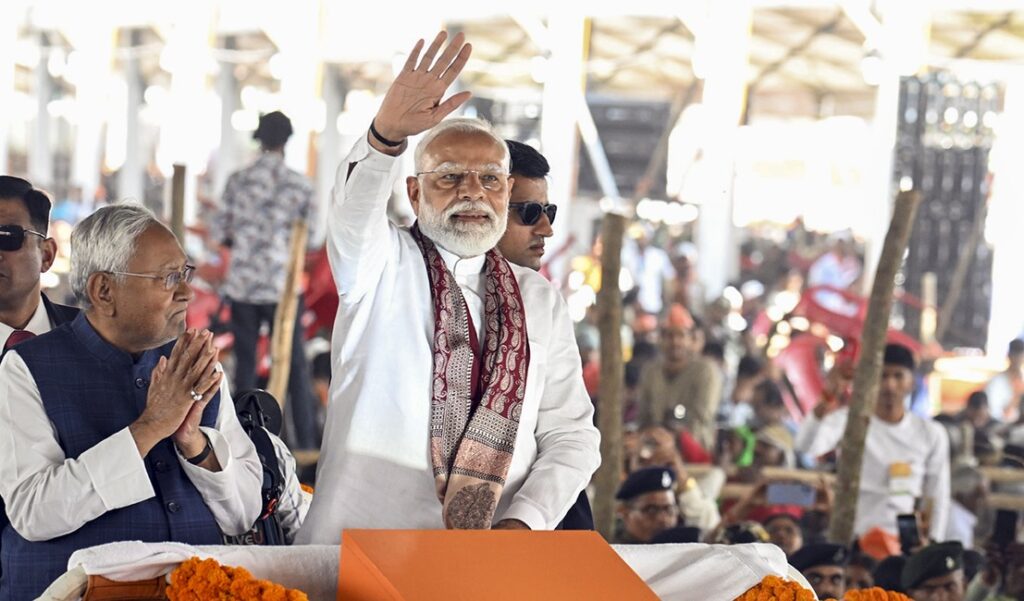
The relationship between Bihar CM Nitish Kumar and PM Narendra Modi remains good, which will play an important role in determining the final seat sharing formula in the coming months
There are also reports that even a section of the Congress has reservations about projecting Yadav as the CM, since the tag of ‘jungle raj’ during RJD rule is still fresh in public memory. Meanwhile, the forward castes, who make up 15.52% of the state’s population, according to the 2022 Bihar caste census, remain firmly aligned behind the BJP
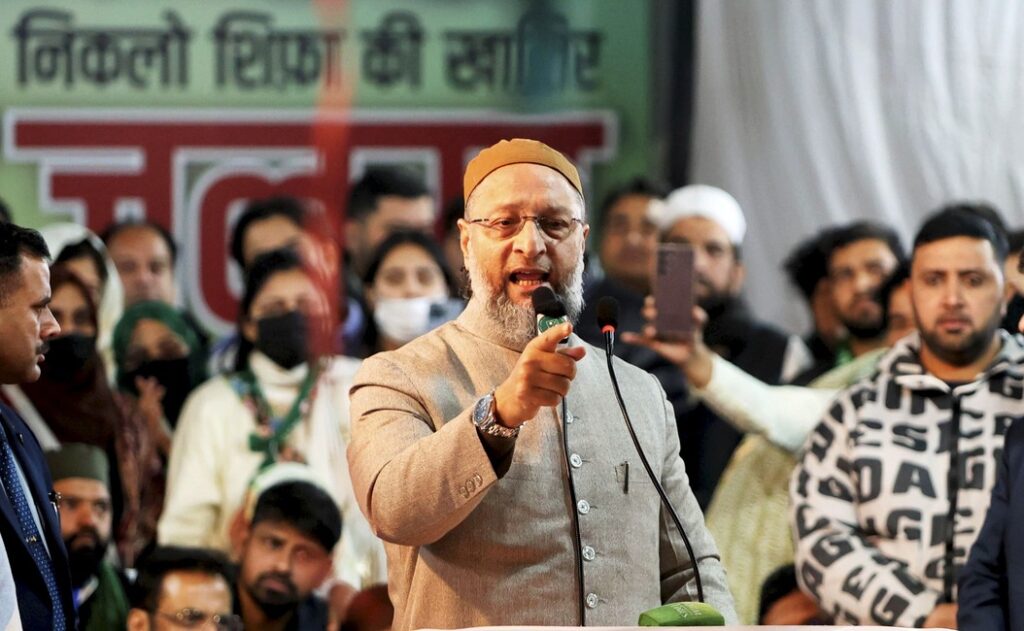
With senior Muslim leaders in the RJD fading away, it’s possible that Asaduddin Owaisi’s AIMIM might cut into the RJD’s minority votes. (Right) Mukesh Sahni switching sides this time has further complicated the seat sharing formula for the Mahagathbandhan
The maximum number of Muslim voters are in North Bihar, especially in Kishanganj, Araria, Katihar, Purnia and Saharsa. Earlier, this vote bank was completely dominated by the Congress, but after the Bhagalpur riots of 1989, this vote bank shifted towards the RJD
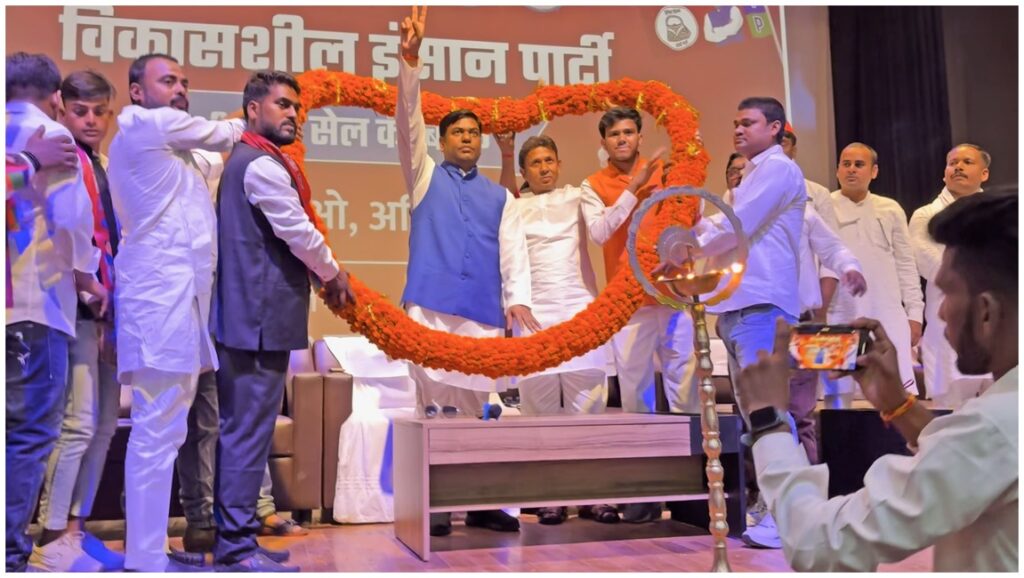
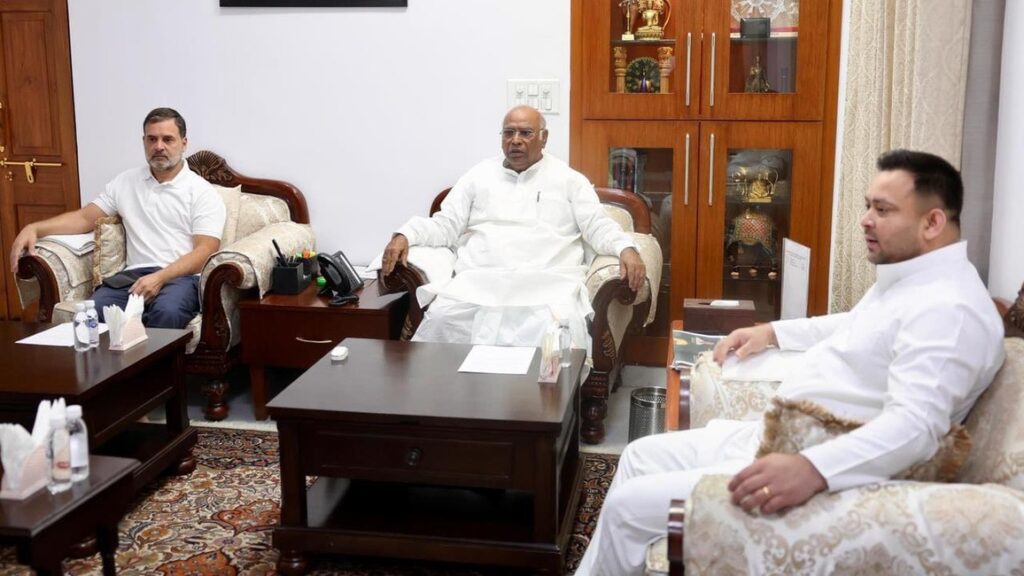
The senior leaders of the Mahagathbandhan have held three meetings so far, but have not been able to finalise seat sharing
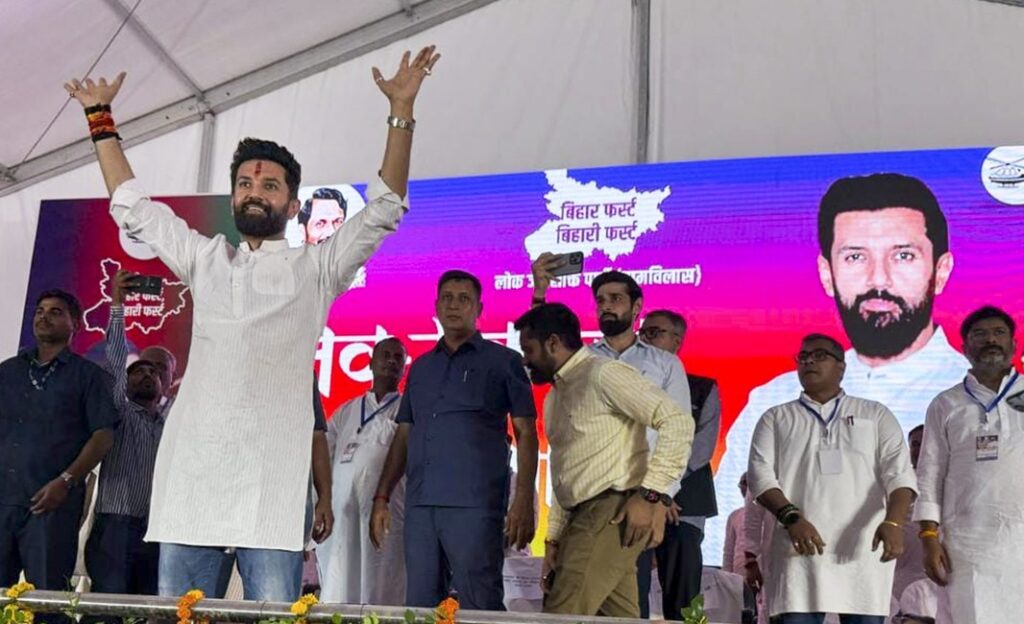
Over the years, the Congress, due to its own fault, lost the valuable Dalit vote bank. The biggest dent was caused by the towering Dalit leader, Ram Vilas Paswan, who cornered the Paswan votes. Now the powerful bloc of Paswan voters, who are about 6% in the state’s population, are backing his son, Chirag.
Over the years, the Congress, due to its own fault, lost this valuable vote bank. The biggest dent was caused by the towering Dalit leader, Ram Vilas Paswan, who cornered the Paswan votes. Now the powerful bloc of Paswan voters, who are about 6% in the state’s population, are backing his son, Chirag. The other major Dalit leader in the state is Jitan Ram Manjhi of the Hindustani Awam Morcha (HAM), belonging to the Musahar community which constitutes about 5% of the population. The Musahars are even more economically and socially backward than the Paswans. Both Chirag and Manjhi are with the BJP-backed NDA. Both are currently ministers at the Centre.
there is no scope for the Mahagathbandhan to infiltrate their vote bank. However, Manjhi is following in the footsteps of Lalu—his son is a minister in the Bihar government and his wife is an MLA. His daughter, Deepa, is also an MLA and his son-in-law, Santosh Suman, is a member of the Legislative Council.
Manjhi claims to be a descendant of the Musahar icon, Dashrath Manjhi, who famously chiselled a road by hand through the hills between Atrari and Wazirganj blocks of Gaya district. Chirag, on the other hand, projects himself as the true inheritor of his father’s legacy. But he too has soaring ambitions and wants to be chief minister.
Recently, posters and banners were put up overnight, urging Chirag to come back to Bihar politics. There was more to the poster campaign than meets the eye.
As journalist Neerja Chowdhury points out, there might have been a well-thought-out plan behind the random appearance of the posters. That morning, Chirag had had a long meeting with Nitish Kumar about seat sharing. According to sources the canny politician asked Chirag to discuss the issue with senior leaders of the NDA. Rajesh Bhatt, the chief spokesperson of LJP-RV, said that the posters were put up by the district president who wanted Chirag to become CM. With Sahni pitching for Tejashwi to be CM with himself as deputy CM, and both Manjhi and Chirag being open about their ambitions, it’s clear that the smaller parties are using pressure tactics to bargain for a greater share of seats.
NDA’s Eyes On Mahagathbandhan
On the surface, things appear to be a lot calmer in the NDA. Both Narendra Modi and Amit Shah have said that they have no problem with Nitish Kumar being projected as the CM’s face. Recently, at the coordination committee meeting, Nitish Kumar appealed to all the allies to take the government’s achievements to the people. However, there is a certain amount of anti-incumbency that has built up against the 17-year rule of Nitish Kumar. Though industrial development in Bihar remains stalled, there has been some public infrastructure development and an improvement in access to education as more schools and colleges have been opened. Also, the Har Ghar Jal Yojna (water in every house programme) is popular among the people.
The NDA is keeping a close watch on Rahul Gandhi hitting the streets in the state. The Congress has also made certain changes in its state unit, which have been noticed by the people; but it might be a little too late for the party to reap any benefits.
Despite the optics of bonhomie between Nitish Kumar and Modi, things are not hunky-dory between the state units of the BJP and JD (U). The central leadership of the BJP has prevented the emergence of a second-rung leadership in the state, especially with focus on the vital Nonia, Konia, Dalit and Mahadalit castes.
Nitish Kumar undoubtedly remains the most accepted leader of the Koiri-Kurmi community. These two castes make up 11-12% of the population, while the forward and Kanu-Baniya castes constitute 15% and 5%, respectively. The majority of all these communities are aligned with the BJP.
Prohibition also works in favour of Nitish Kumar among women voters. There are anecdotal accounts of the reduction of domestic violence since prohibition was introduced in the state. In such a situation, it would be unwise to underestimate the Nitish Kumar factor in the upcoming elections.
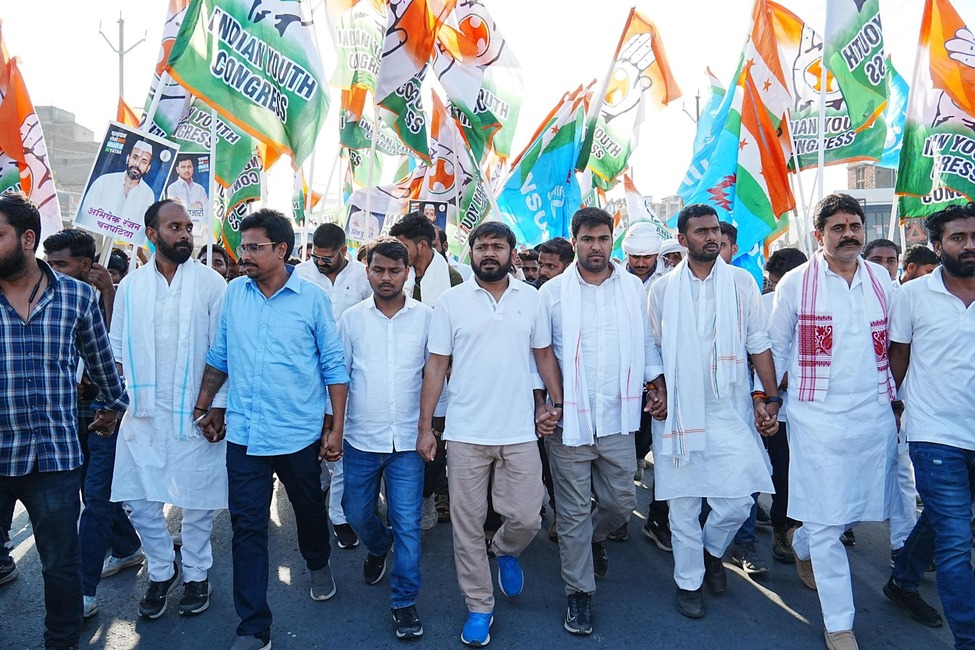
The Congress’ focus on job crisis and migration in Bihar has evoked a good response, but it is hard to gauge the electoral benefits