
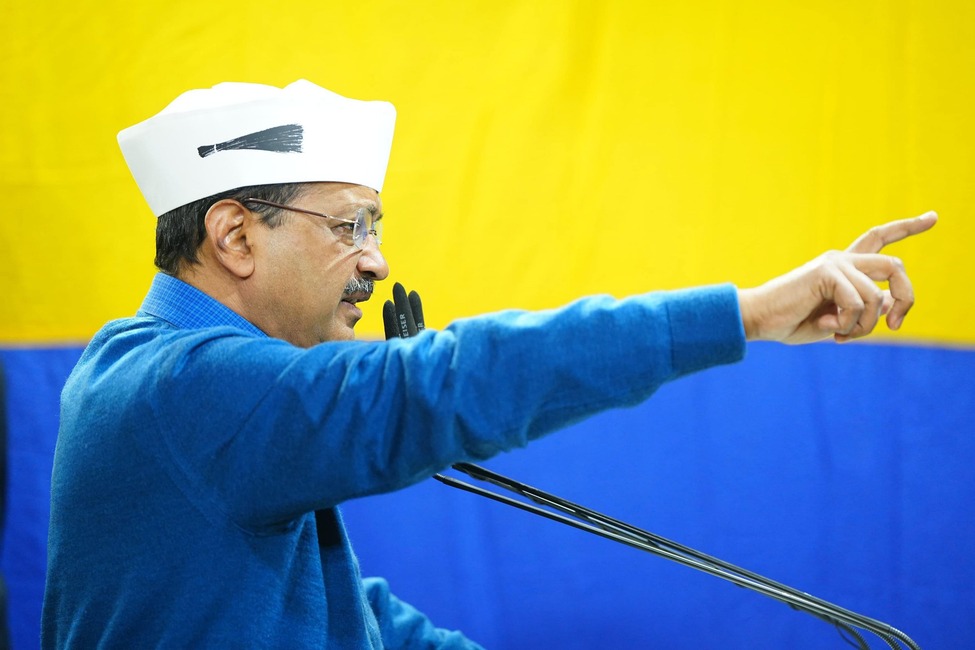
AAP supremo Arvind Kejriwal has maintained a low profile since losing the Delhi Assembly elections
The defeat of Arvind Kejriwal’s party in the Delhi Assembly elections has opened up the internal fault lines and threatens AAP’s national political ambitions. Whether Kejriwal can retain his hold on the party remains to be seen
The Aam Aadmi Party (AAP) was still coming to terms with its humiliating defeat in the Delhi Assembly elections when 16 of its councillors, including Bobby Kinnar, rebelled and joined the Indraprastha Vikas Party (IVP).
These people took membership of the new party in the presence of six-time councillor and IVP President Mukesh Goyal and its senior leader, Hemchand Goyal. It appears that AAP, the party that had taken on the mantle of being the hope of many people a decade ago, is imploding under the weight of its own contradictions.
Mukesh Goyal said that Delhi had had a lot of expectations from AAP but it had failed to fulfil them. The party had not kept many of the promises made to the people then, on the basis of which it had come to power. “Because of this, we formed the Indraprastha Vikas Party and it is increasingly getting people’s support,” he said.
AAP sources attribute the exodus of councillors from the party to Kejriwal’s lack of interest in Delhi politics following the defeat in the Assembly elections. Most of the top leaders of AAP, including Kejriwal, have started to focus on Punjab and Gujarat, leaving Delhi to Atishi Singh and Saurabh Bhardwaj. This is tantamount to the party scripting its own downfall. Now the situation is such that due to internal conflict, rebellion has reared its head in six states such as Uttar Pradesh, Himachal Pradesh, Goa, Gujarat, Uttarakhand, and Punjab at the national level. Opposition to the party’s lone chief minister, in Punjab, Bhagwant Mann, is increasing within the party.
However, the process of AAP’s disintegration is hardly a new phenomenon. The cause of the internal indiscipline is Kejriwal himself. People like Prashant Bhushan, Yogendra Yadav and Kumar Vishwas, among many others, who played an important role in AAP’s formation, were sidelined by Kejriwal just a few months afterwards
However, the process of AAP’s disintegration is hardly a new phenomenon. The cause of the internal indiscipline is Kejriwal himself. People like Prashant Bhushan, Yogendra Yadav and Kumar Vishwas, among many others, who played an important role in AAP’s formation, were sidelined by
Kejriwal just a few months afterwards.
Yadav, one of the founder members of AAP and an old associate of Kejriwal, says, “The party had claimed that it would change the pattern of politics, but it itself got stuck in the old pattern of politics. Now, after the defeat, the disintegration is apparent to everyone.”
Congress treasurer Ajay Maken says that Kejriwal has no ideology except his own ambitions. Anna Hazare, the face of the anti-corruption movement that led to the downfall of the Congress government of Delhi, also blamed Kejriwal for failing to fulfil the expectations of the public. “All those AAP leaders, from whom the public had high expectations, went to jail for the liquor scam and other charges. This sent a message to the public that Kejriwal says something but does something else,” said Hazare after the Delhi election results.
Over a period of time Kejriwal’s image was tarnished due to his cynical politics. Reports of a subtle power tussle between Mann and Kejriwal have not gone unnoticed by the people and political observers. People are realising that Kejriwal is inordinately focused on power. It is common knowledge within the party that Kejriwal’s path to the Rajya Sabha is being paved by declaring the party’s current Rajya Sabha MP, industrialist Sanjeev Arora, the candidate for the Ludhiana West by-election even before the election date’s announcement by the Election Commission.
The seat fell vacant after the suicide of Ludhiana West MLA Gurpreet Gogi. However, it is not as yet clear whether Sanjeev Arora will resign from the Rajya Sabha before contesting the by-election or only if he wins it. What is clear, though, is that sooner or later Kejriwal will find his way to the Rajya Sabha through this route.
Ever since losing the elections in Delhi, there has been talk in political circles about Kejriwal becoming more active in Punjab though it remained to be seen in what way. Now, after the announcement of Arora’s candidature in the by-election, it is clear that the Mann government will not only exert its full weight to ensure his victory, he will also be accommodated in the cabinet. At present .
It is common knowledge within the party that Kejriwal’s path to the Rajya Sabha is being paved by declaring the party’s current Rajya Sabha MP, industrialist Sanjeev Arora, the candidate for the Ludhiana West by-election even before the election date’s announcement by the Election Commission.
there are two ministerial vacancies in the Mann cabinet. Sukhpal Khaira, who was formerly the leader of the opposition as an AAP member and is now a Congress MLA, commented on X that by making Arora the candidate from Ludhiana West, AAP has ensured that Kejriwal will enter the Rajya Sabha through the back door. He tweeted that Kejriwal had offered Arora a place in the Punjab cabinet so that he could usurp the latter’s Rajya Sabha seat.
Senior Punjab Congress leader Pratap Singh Bajwa also stated that Kejriwal was certain to become a Rajya Sabha MP from Punjab. According to AAP sources, there are many strategic and political reasons for Kejriwal to aspire for a place in the Upper House of Parliament.
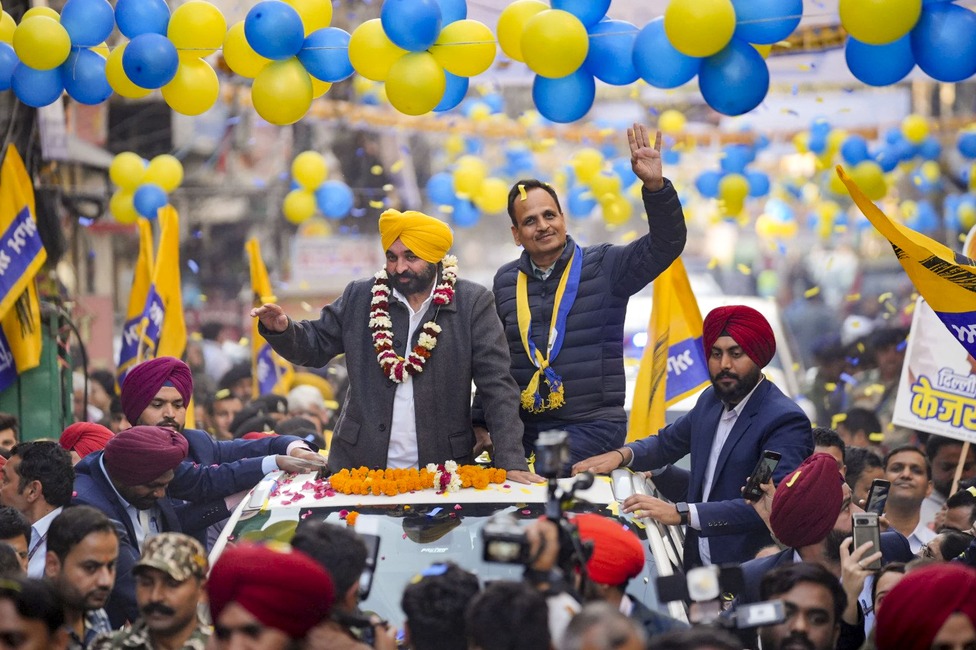
Party insiders say there is a power tussle going on between Kejriwal and Punjab Chief Minister Bhagwant Mann
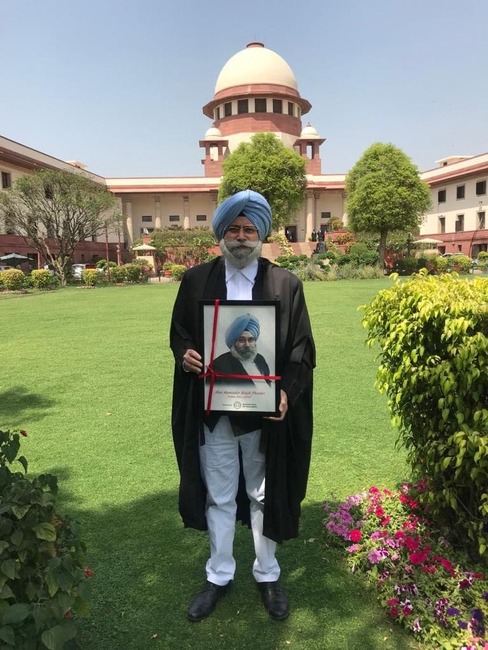
The Supreme Court lawyer and former MLA, H.S. Phoolka, quit primary membership of AAP citing the lack of transparency in the party’s functioning
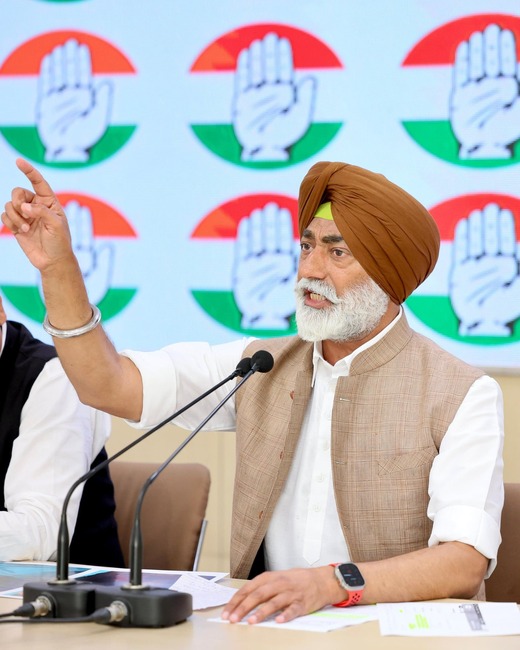
When Sukhpal Khaira quit AAP he wrote a damning resignation letter blaming Kejriwal for promoting supremo culture in the party
Senior Punjab Congress leader Pratap Singh Bajwa also stated that Kejriwal was certain to become a Rajya Sabha MP from Punjab. According to AAP sources, there are many strategic and political reasons for Kejriwal to aspire for a place in the Upper House of Parliament
His entire focus is on making his mark in national politics. If Kejriwal manages to get into the Rajya Sabha, it will improve the party’s profile in the Upper House and also keep him in the limelight. But the downside is that it will give out the message that Kejriwal has moved on from Delhi politics, abandoning his home state after the first major setback. Ironically, Kejriwal is aware that he can pose a challenge to the BJP only by remaining in Delhi.
Both Kejriwal and AAP are currently beset with serious problems on the legal front. In such a situation, his first challenge is to keep the party united, which can be done only by remaining in Delhi. Politically speaking, if Mann is able to ensure Kejriwal’s entry into the Rajya Sabha, the political stature of the Punjab CM will remain intact and it will also satisfy his party supremo’s burning desire to remain relevant in national politics. It could serve as the first step towards revitalising the party’s organisational structure after the Delhi Assembly elections defeat.
However, the resignation of Punjab MLAs H.S. Phoolka and Sukhpal Singh Khaira from the primary membership of AAP has raised a lot of questions. Khaira’s resignation letter minced no words. Though the reasons for the resignations of these senior leaders of the Punjab unit, who played an important role in establishing AAP’s presence in the state, differ, it has dented AAP’s reputation considerably.
Phoolka has said that he will run an anti-corruption campaign along the lines of the Hazare agitation to free the Shiromani Gurdwara Parbandhak Committee (SGPC) in Punjab from the clutches of one family and make the state drug-free. His critics point out he contested two elections on an AAP ticket, but never raised the issue of alleged corruption in the party earlier.
Khaira, on the other hand, raised questions about the alleged arrogance of the party’s top leadership. He also cited speculation about a future alliance with the Congress as one of the reasons for his departure from the party.
However, AAP is trying its best to prevent disintegration of the party. Now, by making major changes in the organisation by appointing state in-charges and according new responsibilities to the leaders, the party has decided to focus on Uttar Pradesh in view of the Assembly elections in 2027.
Four top leaders have been made co-in-charge for Uttar Pradesh. Also, AAP has tried to stem the discontent by appointing many of its disgruntled leaders as in-charge and co-in-charge in other states. Among them is Dilip Pandey, who was angry over denial of the Timarpur ticket; he has been appointed the party’s overseas coordinator.
Jitendra Singh Tomar has been given the responsibility of Madhya Pradesh, Rajesh Gupta of Karnataka, and Rituraj Govind of Himachal Pradesh. Mahendra Yadav has been made in-charge of Uttarakhand, Shelly Oberoi of Kerala, Prakash Jarwal of Maharashtra, Dheeraj Tokas of Rajasthan, Priyanka Kakkar of Telangana, Pankaj Singh of Tamil Nadu and Prabhakar Gaur of Ladakh. By making Vijay Phalara in-charge of Himachal Pradesh and Gyanendra Bhardwaj co-in-charge of Uttarakhand, the party has also tried to convey that new people are also being promoted internally.
It is obvious that AAP is currently beset with difficulties. After the defeat in the Delhi Assembly elections, it was predicted that it would be a major challenge for AAP to keep its workers and 22 MLAs united.
Hence its decision to split the Delhi Municipal Corporation into different zones is fraught with risk because councillors of smaller zonal units will be more prone to poaching. It’s also being said that some of the 22 MLAs in Delhi are in touch with the BJP to join the party.
If AAP loses ground in the very place where it was founded, its ambitions in other states are bound to be affected. Then Kejriwal, whose USP as a crusader against corruption propelled his rise in India’s political landscape, might meet the same fate as Prafulla Kumar Mahanta, president of the Asom Gana Parishad (AGP), who emerged from the student movement but has now become politically irrelevant.
It might be too early to predict Kejriwal’s political demise, but chances of AAP becoming a marginal player in national politics are soberingly real.
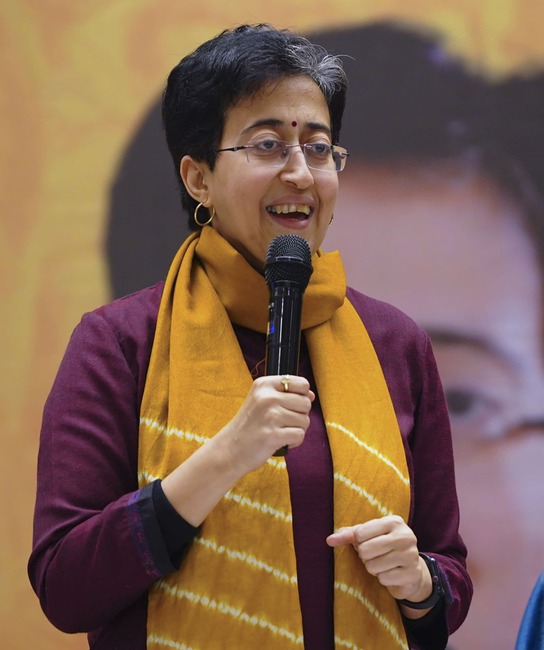
After the Delhi Assembly election loss, Kejriwal has handed over the functioning of the party’s Delhi unit to Atishi Singh and Saurabh Bhardwaj
However, AAP is trying its best to prevent disintegration of the party. Now, by making major changes in the organisation by appointing state in charges and according new responsibilities to the leaders, the party has decided to focus on Uttar Pradesh in view of the Assembly elections in 2027