

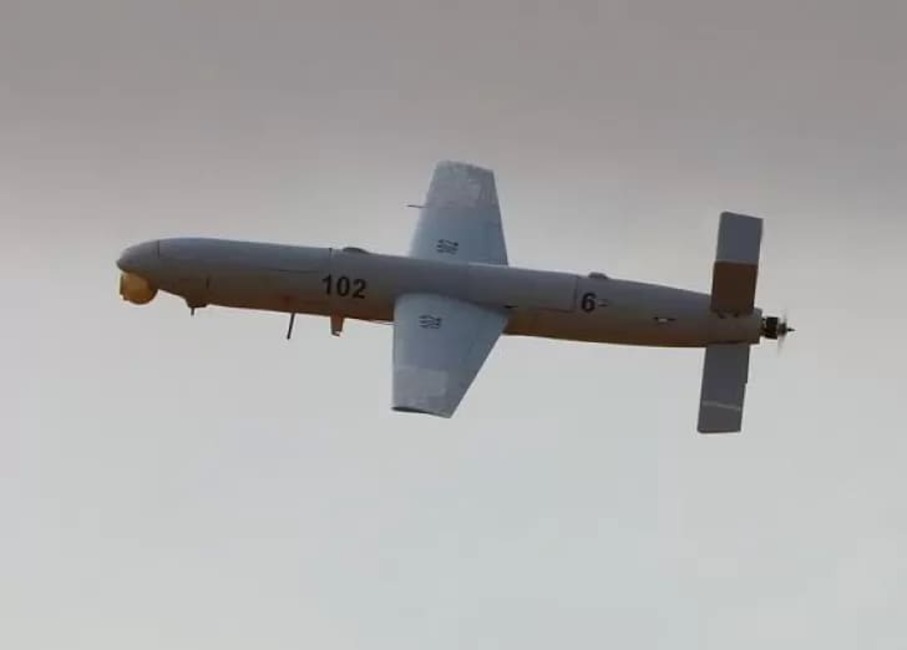
The sharp four-day conflict with Pakistan underlined many of India’s strengths in the military domain and offered some valuable learning about areas in which India should invest to build capacities for acquiring and maintaining an edge from the national security perspective
India has witnessed countless attacks of varying magnitude by Pakistan backed terrorists since the 1980s. Some have been of low intensity, while others have resulted in mass casualties. According to a datasheet compiled by the South Asian Terrorism Portal (SATP), which documents casualties of terror attacks in India, between 2000 and 2025 a total of 14,522 civilians have been killed in terror attacks; the country’s security forces, including the Indian Army, engaged in counter insurgency (CI) operations, have lost 7,582 personnel. During the same period, 24,562 terrorists have been neutralised in CI operations. Data compiled by SATP from annual reports released by the Ministry of Home Affairs also shows that between 2000 and 2019 a total of 11,124 infiltration attempts were made by Pakistan-based terrorists in Jammu and Kashmir alone. It is obvious that such large-scale infiltration across the Line of Control in Kashmir and the international border in Jammu cannot be possible without the active support of the Pakistan Army.
Some of the high-profile terrorist operations that resulted in major casualties and remain etched in the collective memory of the country include the attacks on Parliament (2001), the Akshardham Temple (2002), and in Mumbai (2008), Pathankot (2016), Uri (2016), Pulwama (2019), and now Pahalgam.
The latest chapter in the long-running sordid saga of blood was written on April 22, 2025, at 2.45 pm when four terrorists equipped with AK-47 and M-4 rifles shot dead 25 Hindu tourists and one Muslim ponywallah at Baisaran meadow, barely a few kilometres from Pahalgam in Kashmir. The survivor family members alleged that the terrorists first determined the religious identity of the victims before shooting them at point-blank range. It was the first of its kind incident in the Valley as tourists have never been targeted, even during the peak of terrorism in the early 2000s. An outfit named The Resistance Front (TRF), believed to be an offshoot of the Lashkar-e Taiba (LeT), based in Pakistan, claimed responsibility for the gruesome attack. But, within days, TRF retracted its claim and Pakistan dissociated itself from the massacre. Prime Minister Narendra Modi, who was on an official visit to Saudi
Arabia at the time of the attack, rushed back to Delhi after cancelling the remainder of his trip to take stock of the situation and plan retaliation. Following a series of meetings with the chiefs of the three wings of the armed forces, the National Security Adviser (NSA), officials of the Ministry of External Affairs and the Ministry of Home Affairs, and the Cabinet Committee on Security, Modi greenlighted a series of actions to indicate India’s intentions. These included putting the Indus Water Treaty in “abeyance”, reducing diplomatic staff in the Pakistan High Commission from 55 to 30, and suspension of bilateral trade and the Shimla Agreement. India also appraised Pakistan’s allies such as China, Turkiye, and the Organisation of Islamic Countries, besides the United Nations about its intention to deal with Pakistan with a firm hand. On April 30, Modi, after another round of meetings with the chiefs of the Army, Air Force and Navy along with the Chief of Defence Staff (CDS), declared that the armed forces had been granted “full operational freedom” to plan retaliatory strikes. Over the course of the next few days, it became clear that India was preparing to initiate serious military action, though the time, place and method remained closely guarded until the actual strikes took place in the wee hours of May 7.
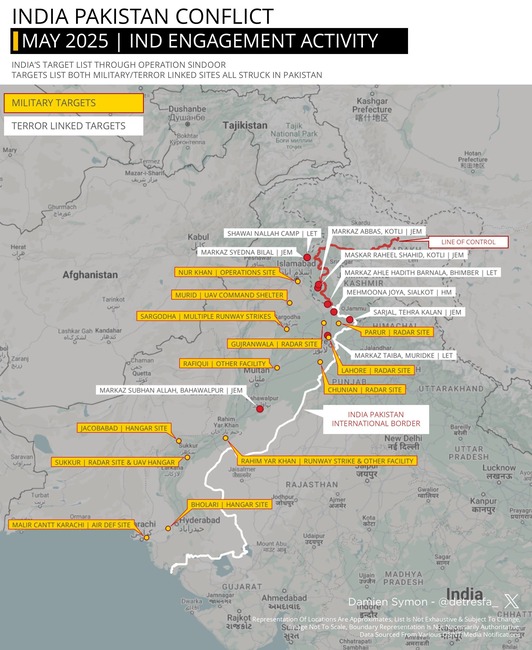
At 1 am on May 7, the Indian Air Force and the Army undertook meticulously planned precision attacks on nine terrorist camps in Pakistan occupied Kashmir (PoK) and Punjab, including the Jaish-e-Mohammed (JeM) headquarters in Bahawalpur and the LeT headquarters in Muridke.
India used a mix of long range standoff weapons, including air-launched missiles and loitering munitions. Pakistan responded by launching counter-attacks codenamed Operation Bunyan Marsoos—using hundreds of Türkiye-made Songar drones across 36 locations in India. The Indian forces moved up the escalation ladder by attacking 11 Pakistani high-value targets, including Sargodha and Nur Khan airbases apart from air defence (AD) networks
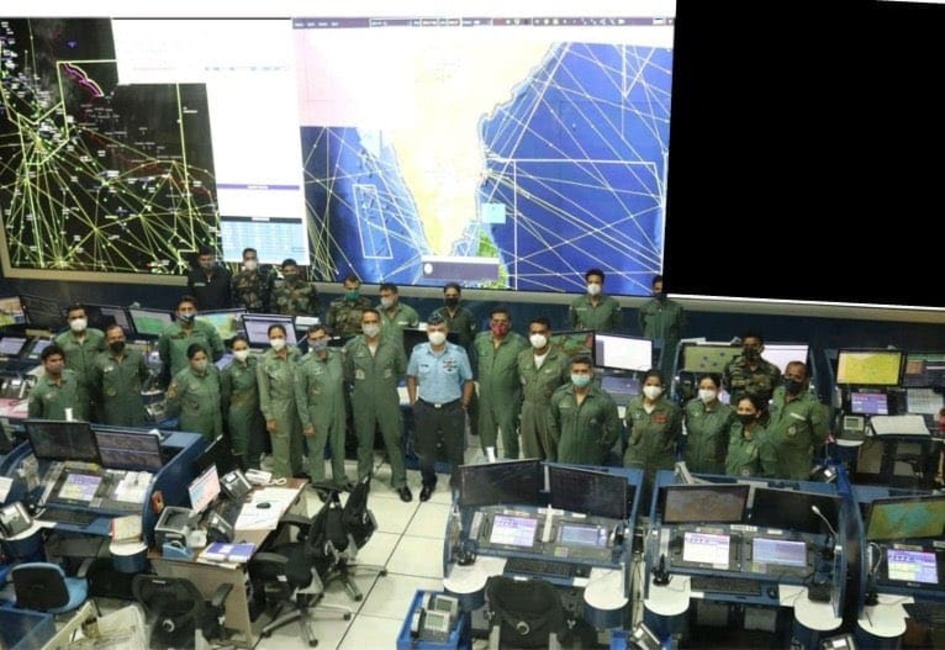
The Indian Air Force’s Integrated Air Command and Control Centre was the hub for running the multi-domain and data-centric battle operations
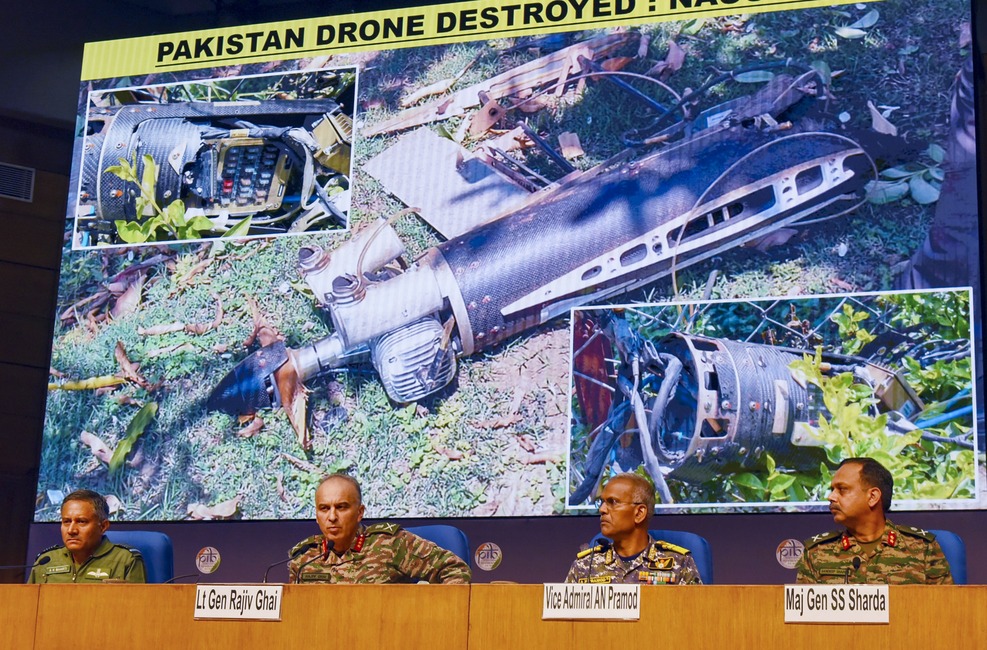
On May 12, at a press briefing organised by the Director General of Military Operations, it was explained to the world how India’s layered air defence
Operation Sindoor took that evolution further by using air- and ground-launched, stand-off weapons like the BraMmos cruise missiles, Israeli Spice bombs, Harop loitering munitions, and French SCALP air-launched cruise missiles using the modern Rafale fighters
It was also reported that India used high-calibre Brahmos missiles to precision-target Pakistan’s strategic assets, including Kirana Hills which houses Pakistan’s nuclear arsenal. However, on May 12, the officers at the briefing denied hitting the Kirana Hills facility during a press briefing organised by the Director General of Military Operations (DGMO). The latest round of exchanges between India and Pakistan was dominated by use of aerial assets by both sides with limited use of heavy artillery guns on the border. On May 10, India and Pakistan announced an abrupt ceasefire with effect from 5 pm that evening, bringing the latest round of short but intense conflict to a sudden end.
Pakistan’s War Through Proxies
The Uri attack by JeM in 2016 had led to the surgical strike by the Indian Army on terror launch pads in PoK. In 2019, the Pulwama attack led to the Balakot strikes by the IAF in Pakistan’s Khyber Pakhtunkhwa region, and on May 7, 2025, India launched a massive cross-border strike in Pakistan targeting nine locations in response to the Pahalgam massacre. With these three operations, the Indian armed forces established a pattern of escalating deterrence.
For long, Pakistan has followed the doctrine of using terror as a tactical means to “bleed India through a thousand cuts”. C. Christine Fair, professor in the Security Studies Programme, Georgetown University, in her book, In Their Own Words: Understanding Lashkar-e Tayyaba, explains Pakistan’s doctrine of using various proxies to keep a low intensity conflict simmering.
The 2008 Mumbai attacks, in which more than 160 people, including dozens of foreigners, were killed, woke up the world
to the dangers posed by LeT. According to Prof. Fair, Pakistan was never satisfied with the outcome of the 1947 partition and nurtured a desire to alter India’s geography.
But when in 1971 India changed the subcontinent’s geography, it was Pakistan that lost territory, resulting in the creation of Bangladesh on India’s eastern border. Pakistan’s intentions can be determined from the then Pakistan foreign minister Zulfikar Ali Bhutto’s words to the UN Security Council on September 22, 1965, when he expressed Islamabad’s willingness to “wage a war for 1,000 years”.
Though Bhutto, who later held the posts of both president and prime minister, was executed by the military regime of Gen. Muhammad Zia-ul-Haq in April 1979, his vision was adopted by the subsequent military rulers of Pakistan. To deal with Pakistan’s proxies, Fair suggests three options: maintain status quo, decapitate the leadership of the proxies, or escalate tensions. But the problem with these options is that Pakistan uses its nuclear capabilities as a tool for blackmailing the world to protect its proxies. New York Times journalist Carlotta Gall, in her book, The Wrong Enemy: America in Afghanistan, makes a case about how terrorist groups have been a part of Pakistan’s strategic doctrine for decades now. India has managed to call Pakistan’s nuclear bluff this time by executing strikes deep inside its territory and successfully demonstrating that it can control the escalation factor.
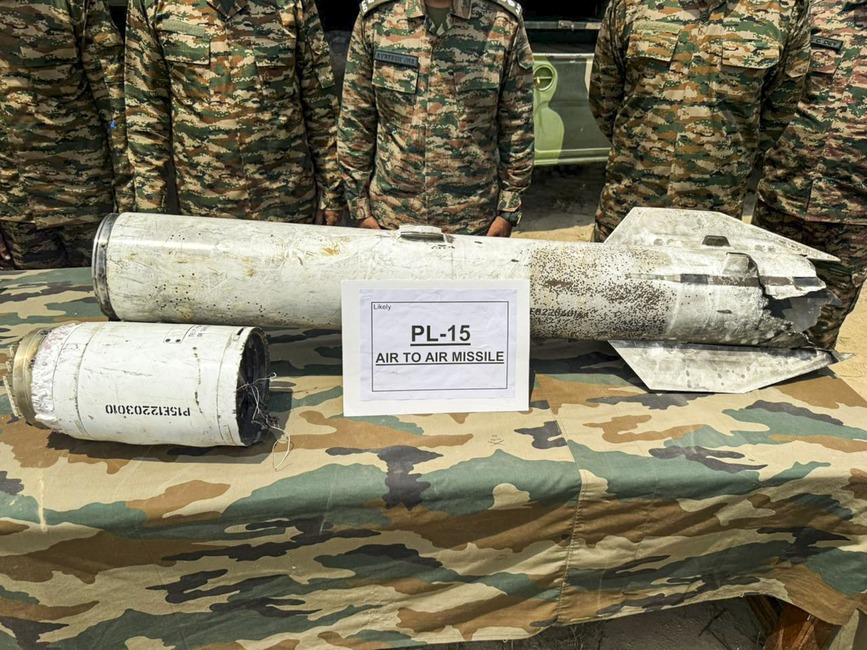
put up a virtually inpenetrable wall against the repeated waves of Pakistani drone and missile attacks
According to Prof. Fair, Pakistan was never satisfied with the outcome of the 1947 partition and nurtured a desire to alter India’s geography. But when in 1971 India changed the subcontinent’s geography, it was Pakistan that lost territory
Lessons To Be Remembered
The sharp four-day conflict offers some significant lessons, not only regarding the evolution of modern-day warfare but also in areas like foreign affairs, use of hi-tech indigenous military hardware and software, and media management, among others.
Operation Sindoor can no longer be seen as just a bilateral dispute between the two countries, but as an important example of military technological innovation, information management, psychological and information warfare, and business-like diplomacy. During the Balakot air strikes, India used airpower for the first time since 1971, validating the notion that India could use military force to punish Pakistan without triggering a war or nuclear retaliation.
Operation Sindoor took that evolution further by using air- and ground-launched, stand-off weapons like the BrahMos cruise missiles, Israeli Spice bombs, Harop loitering munitions, and French SCALP air-launched cruise missiles using the modern Rafale fighters.
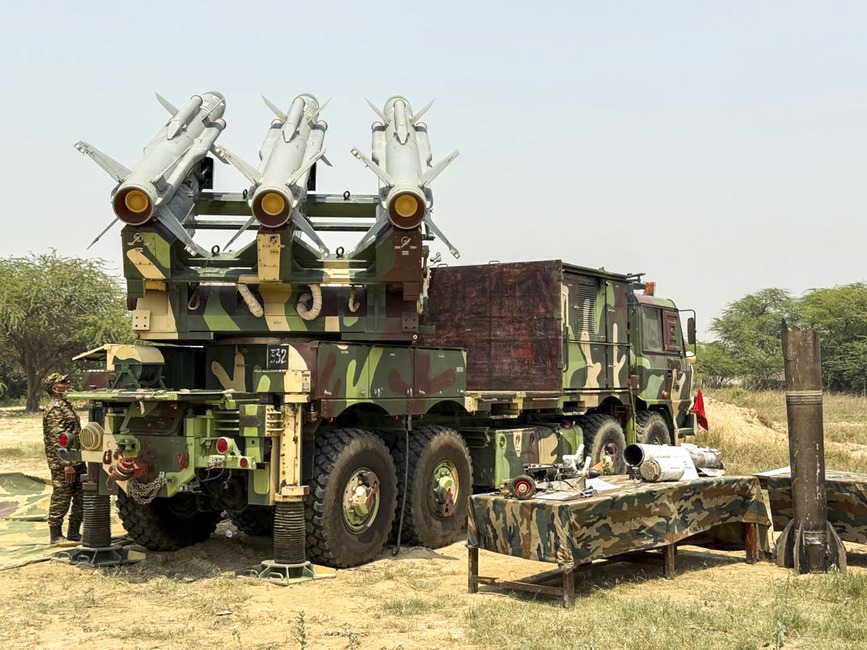
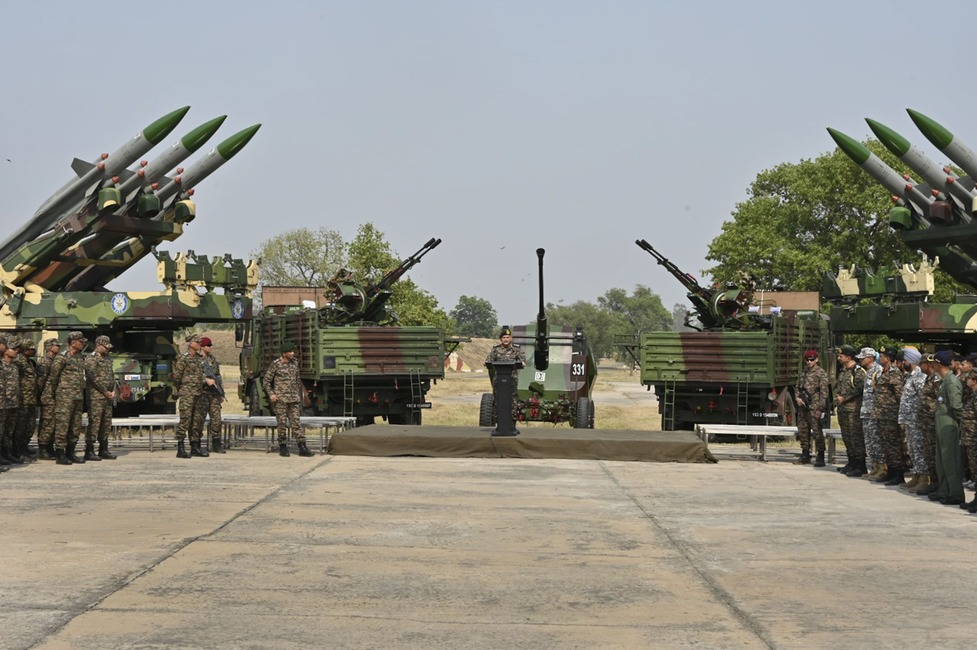
India’s layered integrated air defences turned out to be exceptionally effective. Modern AD has moved from fixed hardware-oriented methods to layered, dynamic, and network oriented. It now comprises multi-layered systems. The indigenously developed Akash surface to air missiles, the QRSAM (Quick Reaction Surface-to-Air Missiles) together with the Russian S-400 and Barak-8 missiles, jointly developed by India and Israel, and the Akashteer air defence command and reporting system (ADC&RS), which digitally merges radar information along with other battlefield data from various other sources for real-time decision-making, proved almost impregnable by Pakistan’s airborne weapon systems
This operation also made the Indian Army’s Cold Start doctrine and the deThe Russian long-range S-400 Triumf and (right) the medium-range, indigenously developed Akash air defence systems were effectively deployed to counter airborne threats
layed Integrated Battle Groups doctrine practically obsolete. Once ground forces are mobilised, as was done in 2001, they are committed to action; it cannot be dialled back, making the cessation of war much more difficult. In contrast, missiles and drones are quicker to launch and easier to calibrate.
Drones Are The New Star In contrast to traditional air combat, which was based on costly and manned fighter jets, drones (Unmanned Aerial Vehicles [UAVs]) turned out to be a game changer in asymmetric warfare. The use of swarms of inexpensive, expendable reconnaissance and strike vehicles demonstrated their ever-increasing potential in the Indian context as well. They have already been proved indispensable in the ongoing operations in the Middle East and the Russia Ukraine war. The increased use of drones in wars has also necessitated the need for cutting-edge counter UAV systems. The way the Indian AD systems intercepted and destroyed massed attacks by Pakistan, using Türkiye-made Songar drones, is an indicator of the sophistication of indigenous counter-measures. India, on the other hand, used domestically produced SkyStriker kamikaze drones to probe Pakistan’s defensive capabilities, gather intelligence, and conduct precision strikes; they performed with greater effectiveness, exposing the weaknesses in Pakistan’s counter systems.
Technological Independence
Operation Sindoor critically underlined
the importance of self-reliance in high-end
military technologies. The effectiveness of the Akash AD system, the SkyStriker drones, indigenous artillery guns, and Indian Space Research Organisation (ISRO) satellites, to name a few, delivered rich dividends for the investments made in defence production under the Make in India programme. This should encourage the government to accelerate investments in programmes such as the Kusha missile defence system, and the LCA Mk-1A, Mk-2, and AMCA programmes, besides establishing robust public-private partnerships in the emerging sectors like drone technology and robotics. This will not only reduce dependence on foreign suppliers, it will also help in building indigenous supply chains.
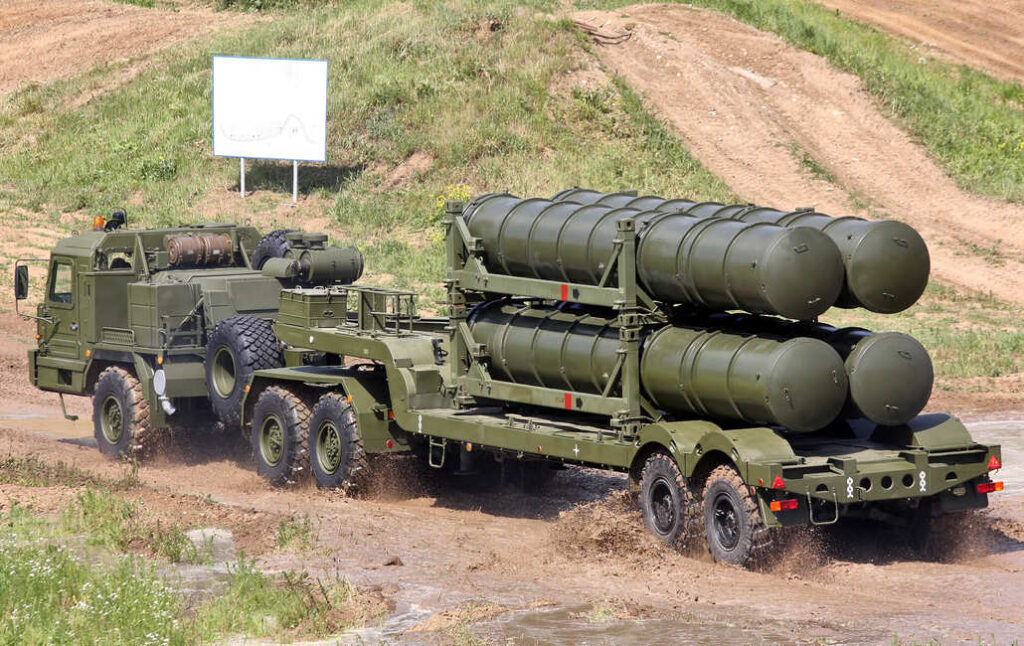
The Russian long-range S 400 Triumf and (right) the medium-range, indigenously developed Akash air defence systems were effectively deployed to counter airborne threats
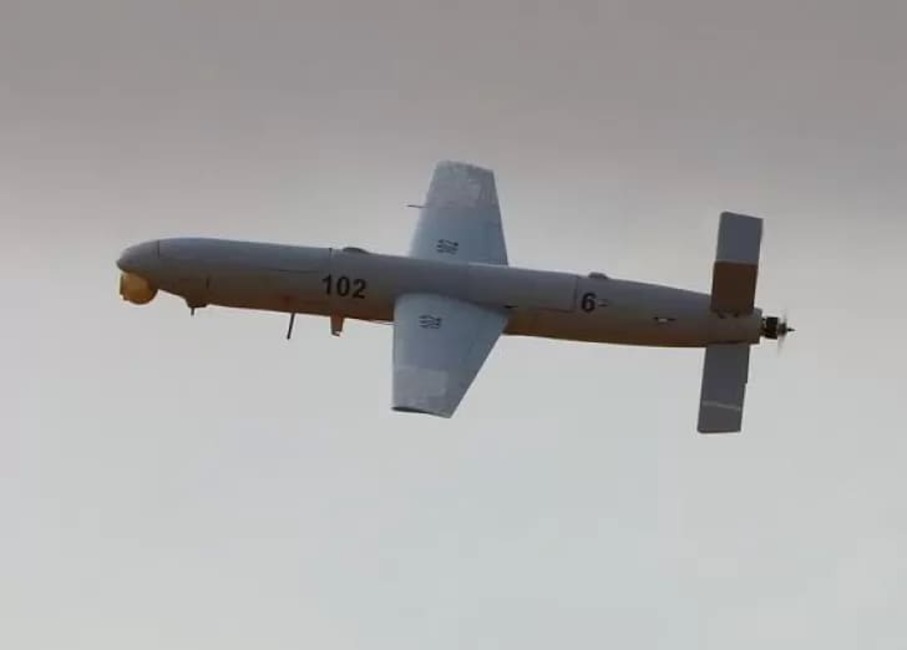
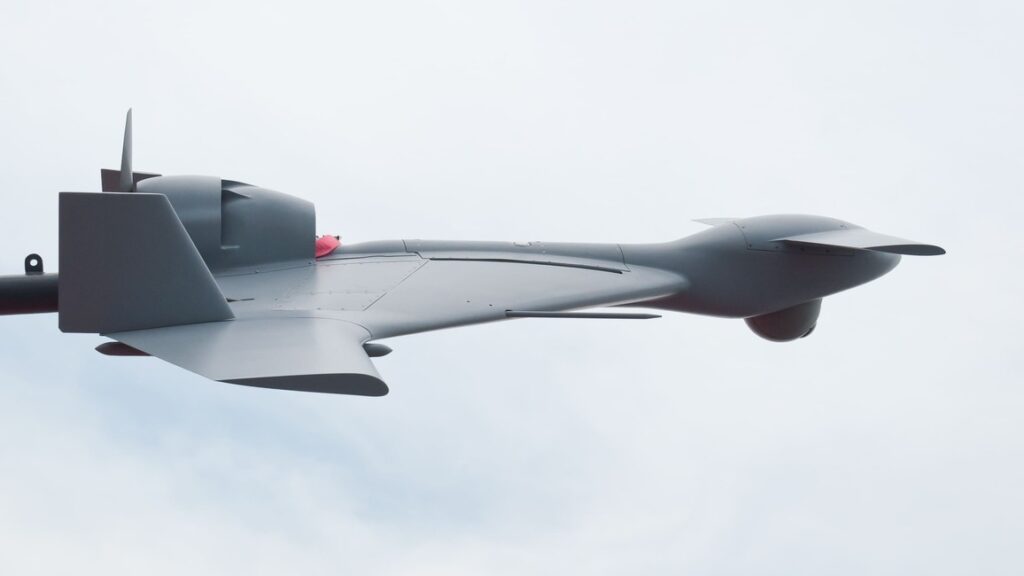
Indian forces used drones like the SkyStriker and Harop to devastating effect to carry out Intelligence, Surveillance and Reconnaissance (ISR) activities as well as launch one-way attacks with the weaponised versions of these platforms
The use of swarms of inexpensive, expendable reconnaissance and strike vehicles demonstrated their ever-increasing potential in the Indian context as well. They have already been proved indispensable in the ongoing operations in the Middle East and the Russia-Ukraine war
Pragmatic Foreign Policy
Claims by US President Donald Trump of mediating the ceasefire even before India or Pakistan could make an official announcement ended up hyphenating the contentious relationship between the two neighbours, which India had managed to assiduously avoid for decades; it is not only puzzling, it’s also problematic.
Trump’s repeated assertions of brokering the ceasefire have caused a lot of dismay and anger in India’s foreign policy establishment, which for long refused to accept any third-party mediation for resolving bilateral issues. Going forward, India should adopt a completely transactional approach while dealing with the US.
Turkiye and China’s open support of Pakistan, including supplying advanced military hardware, should be another eye-opener for the Indian leadership.
Also, media reports about France’s refusal to share the source code of Rafale’s software raises serious reliability issues for future conflict. India should seriously relook at Russia’s offer of supplying fifth-generation Su-57 fighters, particularly if it’s willing to offer complete transfer of technology, including software source code. Unhindered access to software is necessary for complete integration of indigenous weapon systems and indigenous battle management networks. On the trade side, India needs to work towards reducing dependence on Chinese imports by looking for substitutes from Vietnam, South Korea, Japan, and so on.
It will help to convey to Beijing that trade and military support to India’s arch enemy cannot go hand-in-hand.
Operational Jointness
The four-day conflict showed an unprecedented jointness amongst the three services—Air Force, Army and Navy. The Integrated Air Command and Control System (IACCS) became the operational nerve centre, synchronising action by the three
services in real time. While the IAF carried out the bulk of the actions inside Pakistan, the Army and the Navy ensured that Pakistani forces remained pinned down. Our intelligence agencies operated seamlessly to deliver precise data of the targets that facilitated precision targeting.
India’s landmass is four times that of Pakistan, its population six times more, and the Gross Domestic Product (GDP) 12 times larger. Yet, post this conflict, there is a new trend to rehyphenate the two countries. India is a secular democracy with linguistic and religious diversity, whereas Pakistan is an Islamic country with one religion. This needs to be countered by the highest levels of the Indian government.
The second visible change is that the intended emphasis on terrorism seems to have been subsumed by global perceptions that the problem is with the unsettled issue of Kashmir. The old eyeball-to-eyeball conventional warfare along the LoC and the international border is now passe.
This is the age of UAVs, missiles, radar, artificial intelligence, Airborne Warning and Control Systems (AWACS) and space technology. A study by the Australian Strategic Policy Institute notes that China is equal to or ahead of the US in 37 out of 44 critical and emerging technologies.
China, being Pakistan’s all weather friend, at present supplies almost 80% of Pakistan’s defence procurement.
The evolution of India’s military responses was crystallised by Modi in a victory speech he delivered on May 12. He emphatically stated that henceforth India would respond militarily to acts of terrorism by Pakistan and Islamabad’s nuclear threats would not deter India. He also said that India would view terrorists and their military backers as equivalent—this would be the ‘new normal’. India’s new strategy centres on imposing a ‘direct cost’ on the Pakistani military terrorist complex.
For the first time, India struck across the length and breadth of Pakistan while targeting its military terrorist complex.
As Modi proclaimed at the Adampur Air Force Base on May 13, “there is no such place in Pakistan where terrorists can sit and breathe in peace. We will enter their homes and kill them”. Henceforth, being
vulnerable to direct military action, Pakistan-sponsored terrorist groups will have to devote a part of their effort to defensive preparation. This is the same policy the US enforced against the Al Qaeda leadership in Pakistan. This approach, over time, may also serve to sow doubt and mistrust in the minds of the leaders of terrorist groups regarding the reliability of Pakistan’s politico-military leadership.
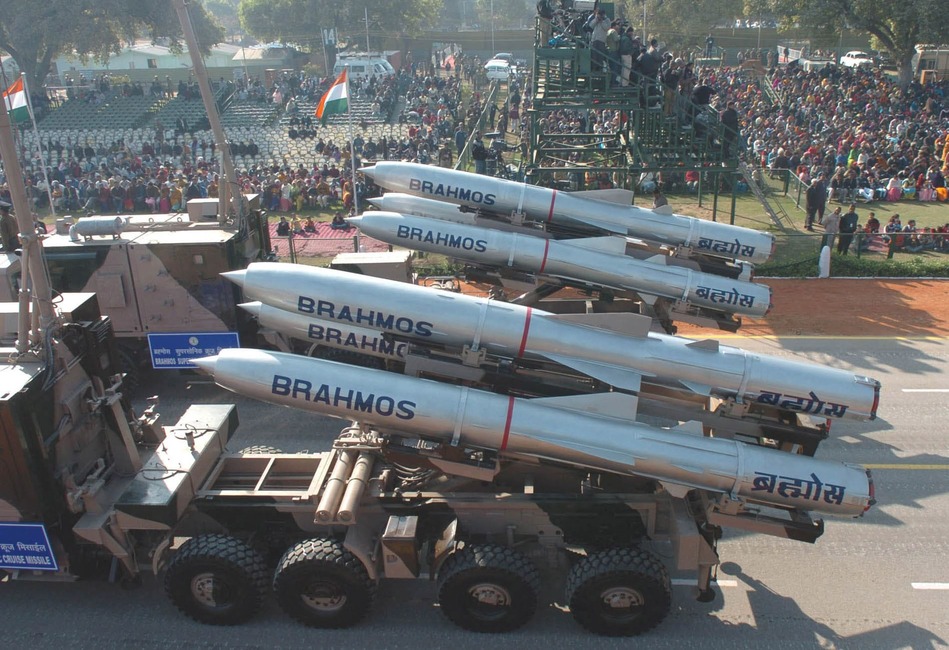
The BrahMos missile system, jointly developed by India and Russia, turned out to be the game changer, which India used to carry out devastating attacks on multiple military targets deep inside Pakistan on May 9-10, which led it to call for a ceasefire
Turkiye and China’s open support of Pakistan, including supplying advanced military hardware, should be another eye opener for the Indian leadership. Also, media reports about France’s refusal to share the source code of Rafale’s software raises serious reliability issues for future conflict
With a new normal being declared by the Indian leadership, it will face a fresh set of challenges where the military response to Pakistan-sponsored terrorism will be a matter of policy—thereby ceding the future initiative to the Pakistan Army. Secondly, India’s declaration that it will treat terrorist acts as acts by Pakistan’s military will most likely escalate the military conflict between the two countries.
Third, Indian intelligence services need to improve their targeting skills by actively following the movements of the top terrorist targets like Israel and the US do.
The Indian leadership will have to leverage peacetime coercive diplomacy to curb Pakistan’s nuisance by effectively leveraging the Indus Water Treaty, deft regional diplomacy and international coordination against terror financing. Military actions, though impressive, should remain the last option.
Information Warfare
Every country, during hostilities, indulges in information warfare for perception management. Pakistan’s information management demonstrated an effective approach to psychological warfare, leveraging digital platforms to create alternative narratives and manipulate international and domestic perceptions. The ability to control narratives, manipulate international attention and create strategic ambiguity has become as crucial as traditional military capabilities. The present-day 24-hour news channels are under constant pressure to churn out fresh content.
The armed forces should be careful about falling in the trap of becoming a content source to feed their needs. The Indian defence forces should be more professional in dealing with requests for access to exercises, interviews, especially of women officers, and establish clear-cut reporting norms during wartime. All media requests need to be handled only by trained professionals.
The Way Forward
The emerging scenarios post-Operation Sindoor need to be carefully considered by India’s policy planners on priority. Pakistan, with access to cutting-edge military technologies, thanks to its all-weather friends like China and Türkiye, is now capable of creating asymmetric capabilities that can be successfully used to counter India’s conventional military superiority.
This change in the strategic dynamic calls for a complete overhaul of India’s military doctrine and defence planning.
First, the state-sponsored, cross-border terrorism by Pakistan needs to be relentlessly focused upon at every forum—as evident from Modi’s May 13 speech. Second, the world powers need to be sensitised about non-hyphenation of India-Pakistan, primarily the current US administration headed by Trump. Indian diplomacy needs to be more proactive and business-like to handle countries like the US, China, Turkiye, and others. Over-dependence on the US needs to be avoided and the time-tested friendship with Russia has to be recalibrated for greater depth. Third, extreme importance should be accorded to development and integration of state-of-the-art technologies in defence, AI and space through research, innovation, development and collaboration with friendly countries.
Fourth, since the Gulf war, it has been amply clear that air power will continue to be the mainstay of modern warfare.
Hence, accelerated development and procurement of systems to plug the gaps in the IAF’s inventory of combat drones, anti-drone systems, radars, air defence systems, missile defence systems and stealth fighters need to be treated as priority. This can be achieved through short term foreign collaboration, but ultimately through building of indigenous capabilities.
Equally important is improving the efficiency and accountability of the internal security and intelligence apparatus through technological upgradation, better training, and avoiding the multiplicity of agencies in a particular sector.
The most important lesson from this confrontation may be the realisation that contemporary warfare will primarily be multidimensional air and space applications. National focus on self-reliance in hi-tech military and civilian applications coupled with a strong economy will be the prime requisite for ensuring enduring national security.
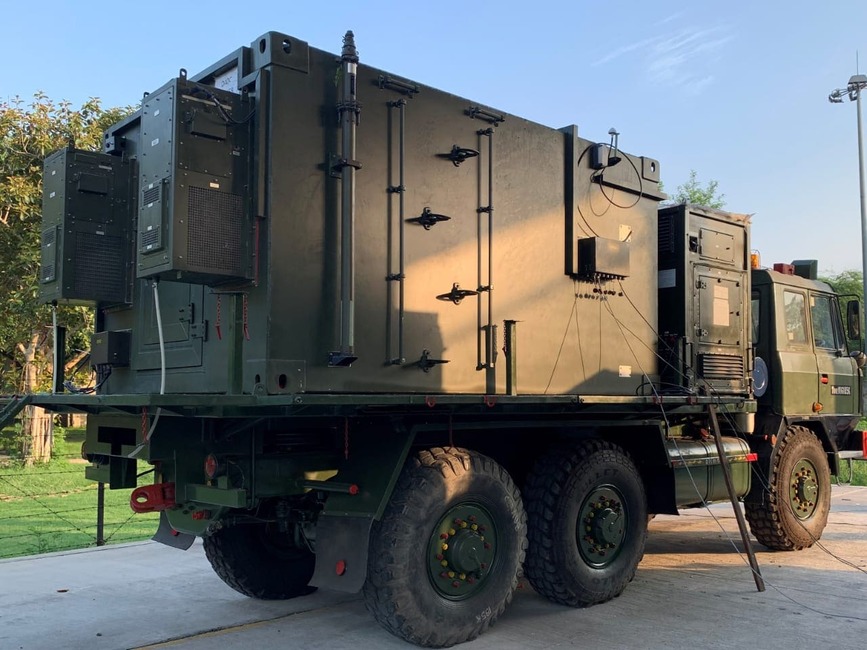
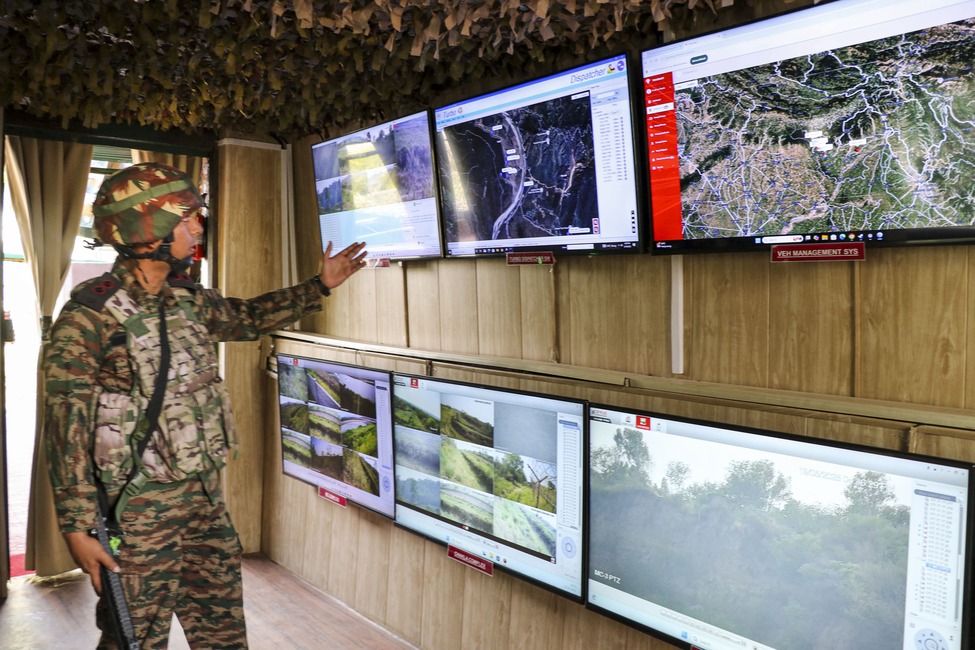
Akashteer, the tactical battle control system, developed by Bharat Electronics Limited, which is integrated with the IACCS and uses advanced AI technologies to process real-time data from various sources, provided situational awareness to the field commanders. This was the first time this system was used in a battle space and it passed with flying colours
For India to maintain its edge against its adversaries, the government needs to accelerate procurement of modern weapon systems to plug the inventory gaps, including fifth-generation stealth fighters
The world powers need to be sensitised about non hyphenation of India Pakistan, primarily the current US administration headed by Trump. Indian diplomacy needs to be more proactive and business-like to handle countries like the US, China, Turkiye, and others