
The latest episode in the India-Pakistan conflict played out against the backdrop of forceful projection of India’s foreign policy that has undergone a radical change in the past decade under Prime Minister Narendra Modi
It was July 2009. The air at the Egyptian Red Sea resort of Sharm-el-Sheikh was thick with tension—and not just from the sweltering summer heat. Behind closed doors, Indian Prime Minister Manmohan Singh sat across from his Pakistani counterpart, Yousuf Raza Gilani. Hours later, the two leaders stepped out with a joint statement that would soon explode into controversy. Indian diplomats worldwide braced themselves. The joint statement not only delinked dialogue from Pakistan’s action on terrorism—just months after the 26/11 Mumbai attacks—it also included a reference to Baluchistan, effectively validating Pakistan’s long standing accusation that India was meddling in its internal affairs. It was, to seasoned observers, a self inflicted diplomatic wound. From Washington, DC, to , phones rang off the hook in Indian missions. Diplomats, caught off-guard, scrambled to draft talking points they didn’t believe in. The Pakistani delegation had walked away with a diplomatic trophy; Indian was left to clean up the mess.
At South Block in New Delhi, chaos reigned. Analysts huddled around the statement like first responders at a crash site, parsing every line for a technical loophole that could limit the damage. There was none. Pakistan had rewritten the narrative—and India had handed it the pen.
Former diplomats voiced what many were thinking: this wasn’t a gaffe—it was a collapse.
“This is not just a blunder. This is an unravelling,” a retired envoy told a primetime news anchor. The BJP branded it a “national shame.” Strategists saw in it something worse: a rupture of credibility. But this episode wasn’t an aberration. It was an echo of a long-standing pattern—an Indian foreign policy marked by moralistic overreach, strategic underreach, and political timidity. The Sharm-el Sheikh statement was only the most visible symptom of a larger affliction. For decades, Indian diplomacy had been more reactive than assertive, often left running helter-skelter, forced to justify or obscure the consequences of political misjudgement. This pattern
of seeking global approval rather than advancing national interest had deep roots, stretching all the way back to Independence.
The Grand Illusion of Neutrality
In the early years after Independence, Indian diplomacy often reflected the personality of its founding elite—idealistic, eloquent, but frequently divorced from strategic calculation. Prime Minister Jawaharlal Nehru envisioned India as a moral force, preaching peace and non-alignment to a bipolar world. But this high mindedness came at the cost of hard realism. The iconic photograph—Nasser’s steady gaze, Tito’s confident smile, and Nehru’s hopeful eyes—may have graced newspaper front pages worldwide, but it purchased India little more than polite applause at the global diplomatic banquet. We had a seat, but not at the high table.
Panchsheel emerged as the philosophical crown jewel of this idealistic foreign policy. Five principles of peaceful coexistence that read like poetry but proved tragically naive against China’s calculated duplicity. While India preached brotherhood, Beijing quietly sharpened its knives. Just weeks before the Sino Indian war, Indian diplomats in Beijing were still parroting the Panchsheel principles of peaceful coexistence, even as Chinese forces amassed at the border. The war shattered Nehru’s illusion—and India’s diplomatic credibility.
This showed the first major cracks in India’s foreign policy idealism. After the 1962 defeat by China, Nehru sought urgent military assistance from the very Western powers India had tried to distance itself from. India appealed to the US for arms, but there was no long-term strategic rethinking. Instead, the country slipped back into the comfort zone of non-alignment, which by now had become more rhetorical than relevant.
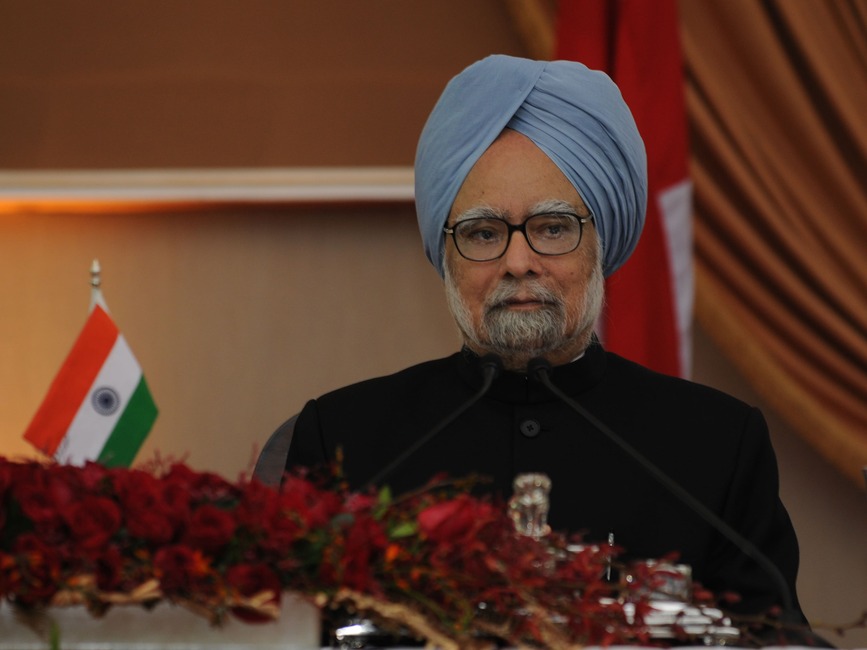
The Sharm-el-Sheikh declaration in 2009 during the Manmohan Singh’s UPA-II government is seen as one of the lowest points in
India’s foreign policy post the 26/11 Mumbai terror attacks
But this episode wasn’t an aberration. It was an echo of a long-standing pattern—an Indian foreign policy marked by moralistic overreach, strategic underreach, and political timidity
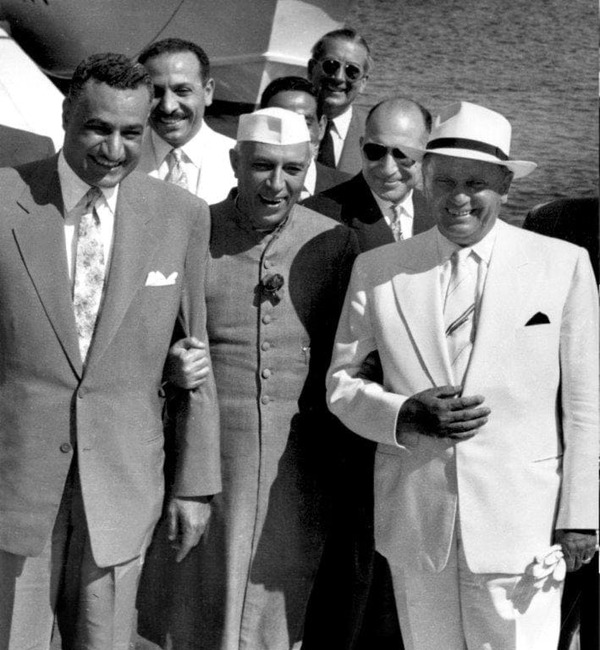
(From left) Gamal Abdel Nasser, Jawaharlal Nehru and Josip Broz Tito at the Brioni Meeting in 1956 that led to the formation of the Non-Aligned Movement
The Non-Aligned Movement became India’s costly altar of sacrifice. Tashkent claimed Shastri’s life and swallowed the hard-won victories of 1965.
The 1971 war with Pakistan under Indira Gandhi was a rare and brilliant moment of strategic defiance. India backed the Mukti Bahini in East Pakistan and signed the Indo-Soviet Treaty of Peace, Friendship and Cooperation, defying US and Chinese pressure. Nixon and Kissinger openly sided with Pakistan, even sending the USS Enterprise to the Bay of Bengal as a show of intimidation. Though India prevailed militarily, the aftermath did not translate into sustained diplomatic capital. The Shimla Agreement—hailed as a diplomatic triumph—crumbled into bitter dust, taking with it every territorial gain, every strategic advantage. India did not even press the advantage of the Shimla Agreement, allowing Pakistan to continue its Kashmir narrative internationally. Moreover, the US reaction to India’s 1974 nuclear test—Project Smiling Buddha—was a clear signal that India would be diplomatically isolated if it pursued strategic autonomy. India did little to counter that narrative.
Most haunting of all: 2,163 Indian soldiers simply vanished into the diplomatic ether. Brave men who answered their nation’s call, only to become nameless statistics in a policy that valued principles over people, idealism over pragmatism.
The 1980s saw India grappling with internal and external crises. The assassination of Indira Gandhi and the rise of Khalistani terrorism saw Pakistan actively fomenting cross-border violence.
When Pakistan-backed terrorists brutally killed 35 innocent Sikhs in Chattisinghpora (March 2000) in Kashmir, it was widely reported as a ploy to sabotage President Bill Clinton’s visit to India. Yet, Clinton did not condemn Pakistan by name. The Indian government did not push hard diplomatically. It was business as usual, and another opportunity to expose cross-border terrorism was allowed to slip through.
In the same decade, India remained largely mute during the US-Pakistan nexus in Afghanistan. Even as Pakistan’s Inter-Services Intelligence (ISI) received billions of dollars in arms and training from the CIA, some of which later spilled into Kashmir, India hesitated to call out this duplicity internationally. Fear of antagonising Washington kept Indian diplomacy cautious and self censoring.
By the 1990s, India was burdened with a faltering economy and a diffident foreign policy. The 1991 balance of payments crisis forced India to seek help from the International Monetary Fund (IMF) under strict conditionalities. Strategic autonomy was compromised for economic survival.
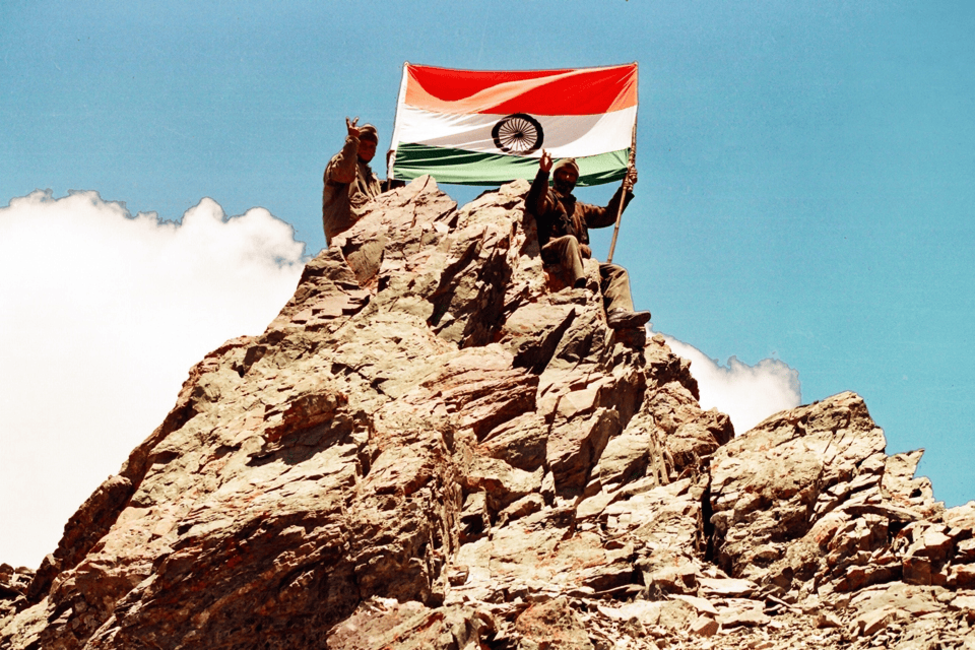
The Kargil war in 1999 was yet another chapter of treachery that was written by Pakistan. India’s robust military response handed out another comprehensive defeat to the country that has used terrorism as an instrument of state policy for more than 75 years
NAM became India’s costly altar of sacrifice. Tashkent claimed Shastri’s life and swallowed the hard-won victories of 1965. The 1971 war under Indira Gandhi was a rare and brilliant moment of strategic defiance
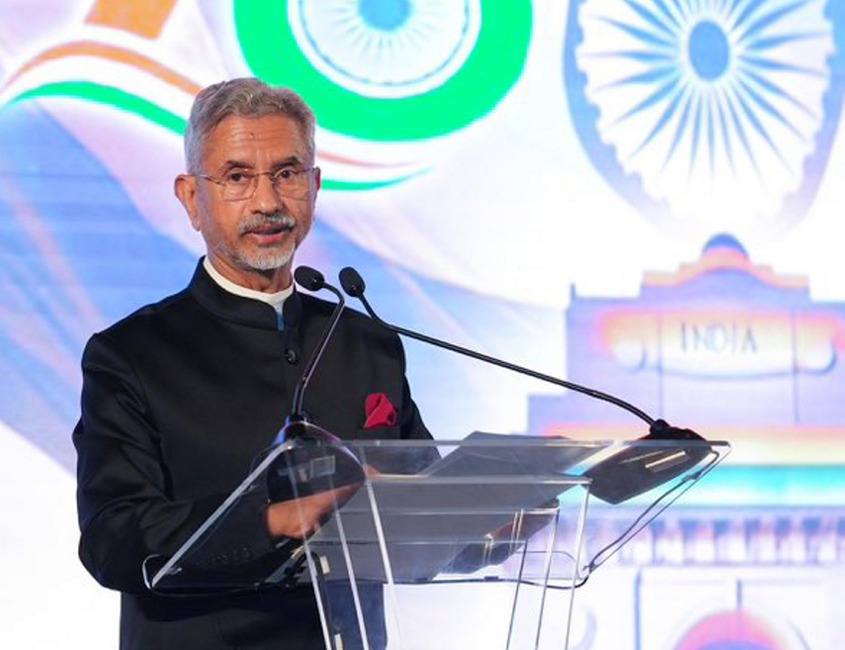
External Affairs Minister S. Jaishankar has been the most vocal champion of Modi’s muscular foreign policy
Bihari Vajpayee were a breather, though, as New Delhi made a bold assertion of sovereignty, but the US imposed sanctions, and India quickly entered a phase of “damage control” .
The Kargil War in 1999 saw international sympathy for India but, again, New Delhi refrained from pushing the diplomatic envelope. Despite credible evidence of Pakistani aggression, India sought US mediation rather than leveraging its position for long-term diplomatic gains.
Diplomatic Marginalisation: The Burden of Soft Power
In the wake of India’s independence, the world’s gaze often met the young nation with scepticism, a reflection not just of global powerplays but of India’s own leaders, whose timidity cast long shadows. Jawaharlal Nehru, revered yet reticent, set the tone—a dreamer of non-alignment who faltered when resolve was needed.
In the 1940s, Winston Churchill sneered, “India is no more a nation than the equator,” his colonial contempt dismissing a billion aspirations as chaotic. India’s leaders, still shaking off imperial chains, absorbed the insult, their silence louder than defiance. Fast forward to 1971, as Henry Kissinger, in Washington’s cold corridors, spat, “The Indians are bastards anyway.” India’s bold support for Bangladesh’s liberation had rattled the US, yet its leaders, cautious in the Cold War’s crosshairs, let the slur pass without retort, their restraint mistaken for weakness. In the 1960s, John Kenneth Galbraith, US envoy, called India a “functioning anarchy”, a quip that stung like a half-truth, mocking India’s chaotic democracy while its leaders hesitated to project strength. Decades later, Singapore’s Lee Kuan Yew jabbed, “India is an open society with a closed mind,” his words cutting at a bureaucracy-heavy nation led by those too timid to unleash its potential. These barbs, sharp and precise, painted India as a giant too meek to roar. Nehru’s caution, Manmohan Singh’s indecision at Sharm-el Sheikh—delinking terror from talks and nodding to Pakistan’s Baluchistan claims—betrayed a lack of fortitude. Each slight, from Churchill’s sneer to Kissinger’s curse, exposed a truth: India’s leaders, bound by idealism or fear, often let the world underestimate them. Yet, in the face of scorn, India rose—not through bold retorts but through grit, proving its worth despite the timidity that once dimmed its shine.
The Modi Moment: Breaking the Shackles
Narendra Modi’s arrival in 2014 was a watershed. Unlike his predecessors, Modi was not encumbered by Nehruvian idealism or post-colonial insecurities. He had no hesitation in projecting India as a civilisational power with global ambitions. His bold outreach began with inviting SAARC [South Asian Association for Regional Cooperation] leaders to his swearing-in and evolved into high-level summits with Quad nations, BRICS, G20, and more. But the most decisive shift came with his selection of Dr S. Jaishankar as external affairs minister in 2019. Jaishankar, a career diplomat with deep experience in both Washington, DC, and Beijing, embodied the new Indian foreign policy: hardnosed, articulate, and unapologetically Indian. “We are not sitting on the fence. Just because I don’t agree with you, doesn’t mean I am neutral,” he once quipped when asked about India’s refusal to condemn Russia over the Ukraine war. India’s decision to buy Russian oil at discounted rates despite American and European pressure marked a bold assertion of strategic autonomy.
“In this world, nations follow their interests. We are no different,” Jaishankar reminded Western interlocutors. The purchase of the S-400 missile defence system from Russia despite CAATSA [Countering America’s Adversaries Through Sanctions Act] sanctions threat from the US was another red line drawn with clarity. Unlike the 1990s, India didn’t cave in. Instead, New Delhi told Washington in clear terms that national security, not foreign approval, guided Indian defence policy. When the US State Department raised concerns over religious freedoms in India, Jaishankar delivered a cutting yet diplomatic rebuke: “We also have views on the human rights situation in the US including on hate crimes and race relations. But we don’t issue reports.”
India’s diplomats today walk with confidence not just because of strong leadership, but because they carry a clear message India’s rise is irreversible, and it will not beg for validation. At the Munich Security Conference, Jaishankar’s retort to European leaders, “Europe has to grow out of the mindset that its problems are the world’s problems” made headlines for its forcefulness. From defending its position on Kashmir after abrogation of Article 370, to firm messaging during the Canada-Khalistan diplomatic row, India has shown consistency in prioritising core national interest over cosmetic consensus. The journey of Indian diplomacy from 1947 to 2024 is a study in contrast. From moral lectures to muscular assertion, from diffidence to dignity, the transformation is real and visible.
India no longer seeks a “balcony seat” in global affairs. It is shaping the agenda, demanding respect, and holding its ground. What was once a reactive policy has become a proactive strategy. As Jaishankar eloquently said, “In a networked world, you don’t get your place unless you stand up for it.” India, after decades of hesitation, is finally standing tall—not as a sermonising power, but as a sovereign force of consequence.
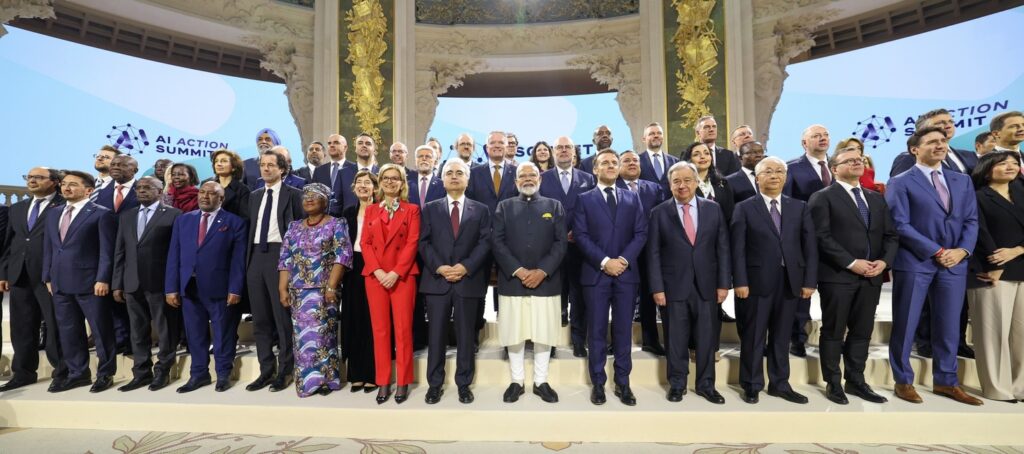
Modi has used every multilateral platform to build international alliances that go well beyond India’s traditional outreach initiatives