

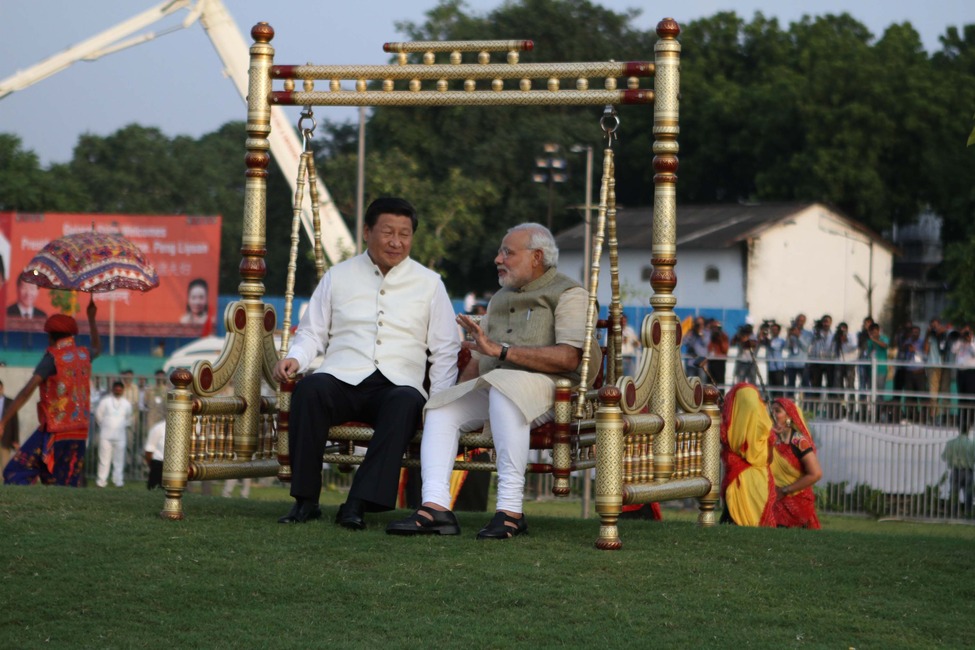
In his first term, Prime Minister Narendra Modi invested considerable effort in trying to normalise relations with China by directly engaging with Chinese President Xi Jinping
China’s aggressive posturing along the border regions in eastern Ladakh and Arunachal Pradesh has been fuelling India’s suspicion of its expansionist intentions. At the same time, China is seeking greater access to Indian markets as European and US markets are turning more inwards
On January 27, 2024, India’s Foreign Secretary, Vikram Misri, met with Chinese Politburo member and Foreign Minister Wang Yi in Beijing.
According to a report in the People’s Daily on January 28, Wang stated that “China and India should strive for mutual understanding, support, and collaboration, rather than fostering suspicion, alienation, and consuming each other.” The state-run CGTN and Xinhua reported that Wang emphasised the negative consequences of “mutual suspicion, mutual estrangement, and mutual exhaustion.”
Referring to a previous meeting between the two leaders in Kazan, Wang urged both sides to seize the opportunity to meet each other halfway and explore more substantive measures. He expressed that improving China-India relations aligns with the fundamental interests of both countries and their peoples and is conducive to safeguarding the legitimate rights of Global South countries, contributing to peace, stability, development, and prosperity in Asia and the world.
Misri mentioned that India and China have conducted a series of productive dialogues and communications based on the consensus reached by the two countries’ leaders in Kazan. He noted that they have effectively managed and resolved differences while promoting the resumption of pragmatic cooperation in various fields. India is keen to celebrate the 75th anniversary of diplomatic relations with China and will fully support China’s presidency of the Shanghai Cooperation Organisation (SCO).
While this meeting and others indicate a gradual normalisation of relations between India and China, it is essential to consider the broader context. What has prompted China to seek agreement now?
Wang’s statements appear unusual and may reflect the pressures faced by China, particularly since President Xi Jinping initiated military action against India in April 2020 to “teach India a lesson.”
India should recognise that China’s recent moves are tactical and temporary, aimed at gaining access to the large Indian market, especially as the US and Europe increasingly close their markets to China. While China maintains its aggressive policies toward Japan, the Philippines, and Taiwan, it has adopted a more accommodating tone toward the US and India. The tensions have heightened concerns within the Chinese leadership due to the ongoing decline of the Chinese economy. In its pursuit of access to the Indian market, Chinese ambassador Xu Feihong and diplomatic missions in India have actively propagated the notion that Indian industry requires Chinese equipment and technicians for economic growth. In discussions, Chinese representatives have directly stated that India should ease restrictions on visas and travel for Chinese nationals, permit imports of Chinese goods, resume air travel, and allow the posting of journalists. China’s limited tactical interest in accessing India’s market is evident from its actions at the border, where military activity continues unabated, indicating that a return to the pre-April 2020 status quo is unlikely. The Chinese leadership has not yet taken any substantial steps to repair diplomatic relations. In addition to ongoing efforts to pressure India in international forums and financial institutions, the People’s Liberation Army (PLA) continues to build border defences and induct additional personnel along the Line of Actual Control (LAC). This includes constructing a bridge at Pangong Tso opposite Chushul and enhancing defences at Depsang, Demchok, and Rudok.
One example of such activities is the decision in April 2020 of the authorities of the Tibet Autonomous Region (TAR) and its Rudog county to create and establish a tourist resort at what was described as the “international” Pangong Tso (Pangong lake) near Chushul in Ladakh. Such a resort would coincidentally create a permanent establishment in the immediate proximity of our border and provide cover for any induction of additional PLA troops into the area.
Later, in July 2024, China constructed a 400-metre bridge across Pangong Tso. Similar were the ‘3rd China Tibet “Rim of the Himalayas” International Cooperation Forum for International Cooperation’ in Nyingchi, TAR, from October 4-5, 2023, and the ‘2023 Annual Conference of the China South Asia Society’ which held a seminar on the “Intersection and Integration of Regional Country Studies and Frontier Studies” in Lhasa on November 4, 2023.
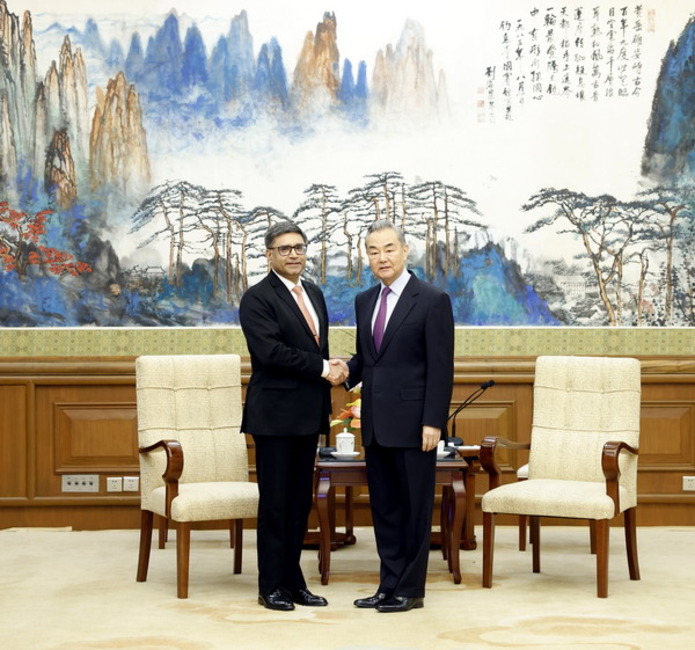
Foreign Secretary Vikram Misri met Chinese Foreign Minister Wang Yi in Beijing in January 2025 to take forward the discussions that took place between Modi and Xi at Kazan last year
China’s limited tactical interest in accessing India’s market is evident from its actions at the border, where military activity continues unabated, indicating that a return to the pre-April 2020 status quo is unlikely. The Chinese leadership has not yet taken any substantial steps to repair diplomatic relations
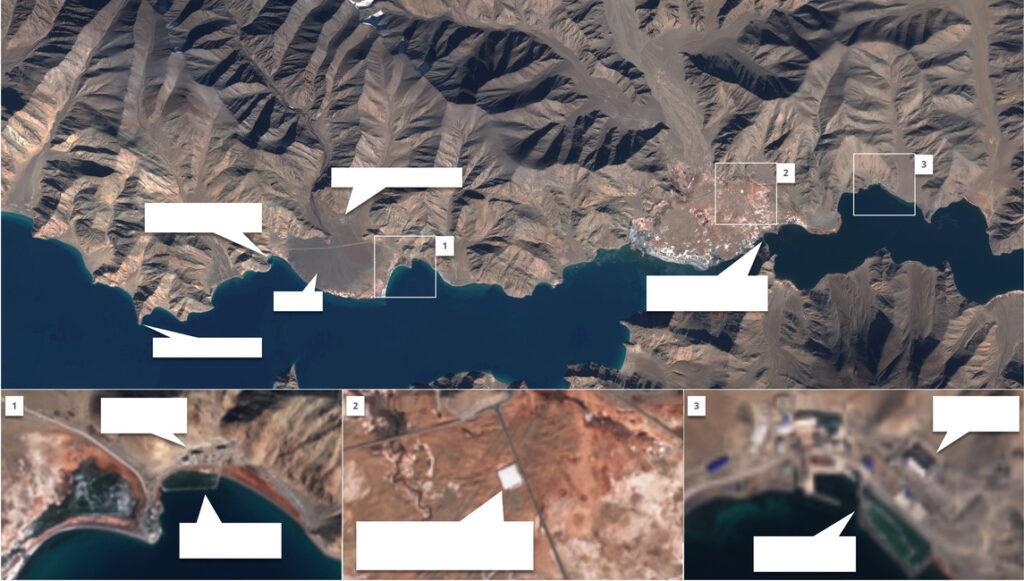
China has continued to build permanent military infrastructure in the contested Pangong area with disregard for India’s concerns
Since the Chinese military incursions in April 2020, a number of PLA posts are noticed to have been established in TAR along the border. A map dated October 2024 depicted at least 64 PLA border posts near, or along, the India-Tibet border in TAR’s Ngari prefecture alone
These are clear indications that China is trying to consolidate its claim and occupation of the Himalayan region. Beijing publicly articulated its claim of sovereignty over the Ladakh region first through the Zhongguo Qingnian Bao in May 2013 soon after the PLA incursion in the Depsang Plains, then in April 2020 and again on the day of the violent, bloody clash at Galwan in July 2020. The activities of the TAR’s leadership are equally indicative. One indicator is the level and regularity of leaders visiting the TAR’s border prefectures or counties.
Since the Chinese military incursions in April 2020, a number of PLA posts are noticed to have been established in TAR along the border. A map dated October 2024 depicted at least 64 PLA border posts near, or along, the India-Tibet border in TAR’s Ngari prefecture alone. The Ngari Prefecture includes the Hetien and Ali Military Sub-Districts (MSD), which have been active’ since April 2013 and seen fairly intense military activity after April 2020. The Hetien MSD exercises operational jurisdiction over the area of the Depsang Plains, while the Ali MSD includes the Galwan Valley.
Eighteen posts are in the Depsang Plains area, 16 around Galwan and Gogra, 16 around Pangong Tso and opposite India’s Chushul region, and 14 in Demchok in Gar county of TAR. For the most part, these are semi-permanent or permanent structures, and a few are the ‘Xiaokang’ model border defence villages. There are other posts along the length of the border. It is difficult to foresee China dismantling them and restoring the status quo to what existed before April 2020.
Recent satellite imagery of January 25 shows that the fiercely contested Yangtse area along the Tibetan frontier of Tawang district is witnessing a change in the status quo by China in terms of connectivity with two new roads under construction even in winter months with far-reaching implications.
The new road, when completed, would likely reach a saddle at approximately 5,200 m along the fiercely contested ridgeline of the Yangtse Plateau, thereby providing China an unobstructed view of India’s ground lines of communications.
The Lampug-Tangwu road under construction replaces the existing mule track and will provide another road connecting to positions opposite the Yangtse Plateau. Currently, a road running along the Tsona Chu is the main connectivity for the Chinese opposite the Yangtse Plateau. The new road under construction goes some 600 m up from the Tangwu Xiaokang. If the road construction continues farther towards the shared ridgeline, it will provide a clear view deep inside Indian territory from the approximately 5,200-m saddle.
India must recognise, as previously stated, that Beijing’s recent overtures are temporary, and it should remain vigilant. With President Donald Trump leading the US, it is likely that any sanctions imposed on China will result in a significant deterioration of China-US relations. This situation will not only have harmful economic consequences for China but will also affect its political landscape. China’s global ambitions could be negatively impacted, and Xi’s authority may be significantly weakened. In response to these circumstances, China has temporarily paused its aggressive stance toward India in an effort to capture its market and bolster international organisations such as the SCO. It is likely that Prime Minister Narendra Modi’s participation in the next SCO summit, scheduled to be held in China, is part of this strategic consideration. Particularly since the events in Galwan, China has been wary of India’s potential to introduce discord within the SCO or even withdraw from the organisation.
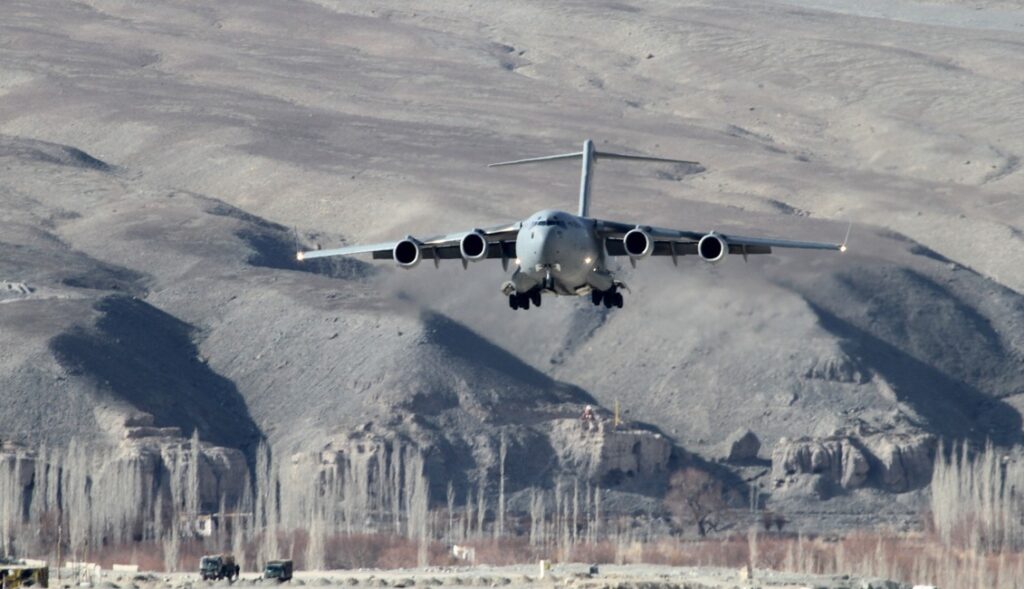
Indian defence forces have been constantly improving their logistical capacity in Ladakh since Chinese intrusion in the summer of 2020
Add Comment