

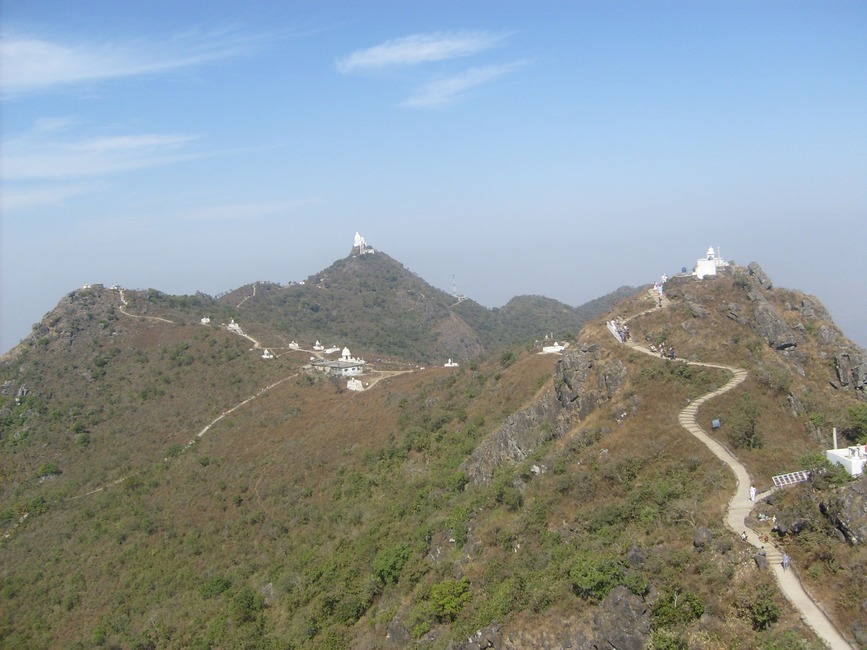
For the Jain community, Parasnath Hill is the site of reverence where 20 Tirthankaras are said to have attained nirvana
Parasnath Hill in Jharkhand has become the latest flashpoint in a religious conflict — this time involving the Jain and Santhal communities, who consider the hill among the holiest of sites in their respective faiths and religious practices
For centuries, two communities, the Jains and the Santhalis, have been gathering at Parasnath Hill in Giridih, Jharkhand—the centre of their faith. They have been performing rituals respective to their faith. But due to certain government decisions in recent years, an unnecessary controversy has been brewing, and now there are attempts to create a rift between the two communities for vested political gain. Parasnath Hill, located in Madhuban in Giridih district, about 160 km from Ranchi, is world-famous and one of the most important pilgrimage sites for the Jain community. According to legend, it was on this mountain that 20 of the Tirthankaras or saviours in Jainism attained nirvana. The hill gets its name from Parshvanath, the 23rd Tirthankara.
On the other hand, among the Santhals, the third largest tribal community in the country and the largest tribal community in Jharkhand, the hill is considered to be the abode of their most important deity, Marang Buru. All customs and religious
rituals of the Santhals begin with worship of Marang Buru. This is also evidenced in British documents. The British marked the hill as Marang Buru of the Santhals.
In a notification issued in August 2019, the Union Environment Ministry declared the area around the Parasnath Sanctuary an eco sensitive zone. Earlier this year, the state government, through a notification, changed Parasnath from a religious place to a religious tourist destination. The decision was opposed by members of the Jain community, who demanded immediate revocation of the order, saying it would lead to more activities in the area, “hurting their religious beliefs”. In January 2023, the Union Environment Ministry issued a notification prohibiting tourism and eco-tourism activities in the Parasnath Hill area. As a result, a legal battle has now erupted between the two communities.
Jain organisations have filed a PIL in the Jharkhand High Court, seeking a ban on consumption of liquor and meat around the hill. In response to the petition, the High Court directed the Jharkhand government to ensure that status quo is maintained.
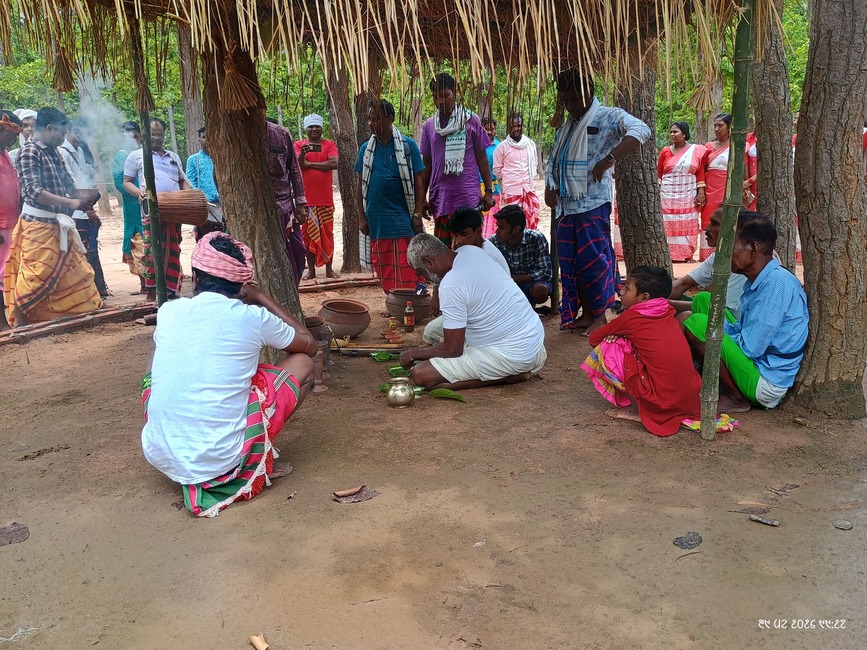
Alcohol and animal sacrifice are an integral part of religious ceremonies of the Santhal tribal community (file picture)
But the demands of the Jain community run contrary to the religious practices and beliefs of the Santhal community. No religious ritual of the Santhal community is complete without animal sacrifice and alcohol. In such a situation, the Santhals have started a movement that has put Parasnath at the centre of their identity. On March 12, 2025, prominent organisations like Marang Buru Foundation and Santhal Samaj Dishom Manjhi Pargana took out an Atikrman Hatao, Marang Buru Bachao (remove encroachments, save Marang Buru) rally in Madhuban.
On the same day, the Santhal community also organised the Dishom Baha festival there. They are firm about continuing their traditional and religious rituals. Santhal organisations have sent a complaint to the government that the Jain community has built more than 50 monasteries and temples on forest land and Santhal land.
Subsequently, on April 12, the Santhal community staged a sit-in before the Raj Bhavan in Ranchi under the banner of the National Tribal Coordination Committee.
They have demanded the removal of encroachments from the Marang Buru hill and preservation of the religious-social beliefs and traditions of the tribals. Following this written complaint, the Giridih district deputy commissioner has constituted a four-member committee, including the Assistant Collector, Land Record Deputy Collector, Block Development Officer and Circle Officer of Pirtand in the district, to investigate the claims and counter claims of the two communities. Sources indicate that the committee has completed its investigation and will soon submit its report to the district Deputy Commissioner
Marang Buru Foundation’s Claims
The Santhals claim that the Survey Khatian Land Rights Record of 1911 and the Bihar District Gazette of 1957 mention customary rights in Marang Buru. During the British rule, a suit related to the claims of Jains was filed in the Commissionerate Court, which was dismissed. After that the Jain community filed an appeal in the Patna High Court in 1917. The High Court also dismissed the plea. After that, the Jain community appealed to the Privy Council, which too upheld the customary law of the Santhal tribals on Marang Buru and the right to hunt for sendra (religious rituals). Ramlal Murmu, president of Marang Buru Institute, alleges that the Jain community has not only damaged the hill but has also built hundreds of temples, monasteries, dharamshalas and undertaken other construction work by violating the Chota Nagpur Tenancy Act, 1908, Forest Rights Act, 2006, and Eco Sensitive Zone Act, 2019.
He alleged that a conspiracy had been hatched to deprive tribals of their rights by misleading the Centre, state governments and courts. On the other hand, Jambu Prasad Jain, president of the Digambar Jain Teerth Kshetra Committee, maintains that no encroachment on the pilgrimage area has taken place, nor have any rules been violated. He also said that if mistakes had been committed in the past, they would be rectified. He points out that since the High Court has directed the state government to maintain status quo it is the latter’s responsibility to stop sale of liquor and meat in the area and that the order of the court should be implemented in letter and spirit. “Our intention is not to hurt anyone’s religious sentiments. Everyone has complete freedom to follow their religious beliefs,” says Jain.
Marang Buru Case Heard In High Court
The Jharkhand High Court directed the state government to impose a strict ban on the sale of liquor and meat in the hills in response to a public interest litigation filed by the Gujarat-based Jyod Sanstha on behalf of the Jain community. In response, the tribal community filed an intervention application in the High Court, which held its first hearing on February 19 and again on April 9. The court upheld the order of the Union Environment Ministry and directed the state government to take necessary steps to ensure the sanctity of the area.