

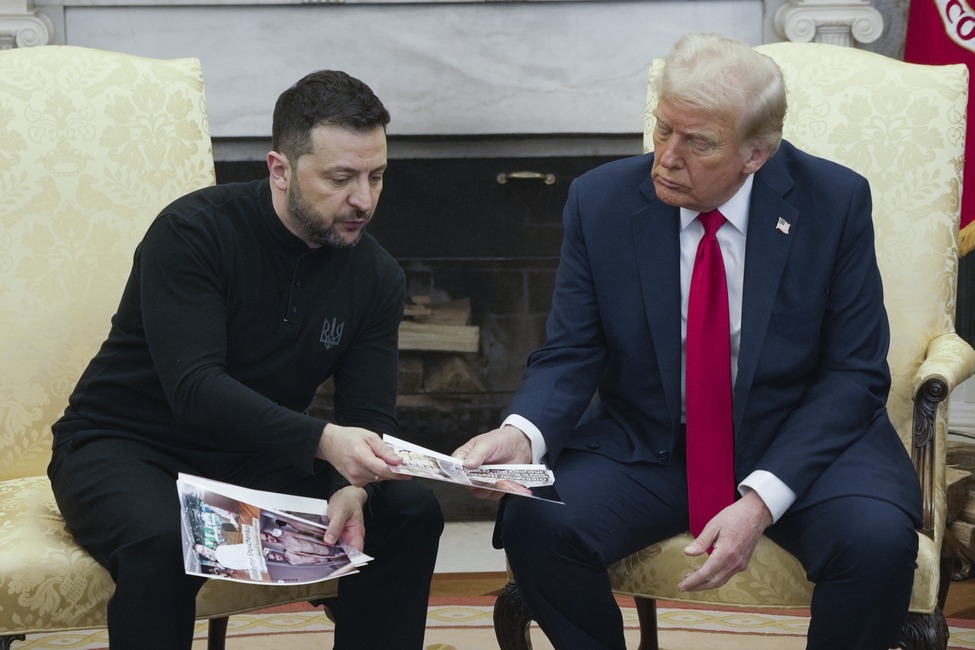
The first meeting between Ukrainian President Volodymyr Zelenskyy and US President Donald Trump turned into a fiery exchange of words
Trump is determined to abandon Joe Biden’s hardline position against Russia as he tries to end the RussiaUkraine war before focusing on China’s expansionist ambitions in the Indo-Pacific
Russia’s invasion of Ukraine saw US-Russia relations hit a new low under the Joe Biden administration. However, with Donald Trump returning to the White House, the two countries held their first high-level diplomatic and security talks in Riyadh on February 18, 2025. This meeting not only addressed bilateral relations but could also influence the direction of the Russia Ukraine conflict.
The talks resulted in four key agreements. Three focused on US-Russia relations: (1) restoring full embassy functions and resuming ambassadorial exchanges; (2) laying the foundation for future geopolitical and economic cooperation; and (3) ensuring that bilateral relations develop efficiently and productively. The only agreement related to the Russia-Ukraine peace process was the formation of special task forces on both sides to facilitate negotiations in a “sustainable, acceptable, and beneficial to all parties” manner. Notably, Ukraine and the European Union (EU) were not invited to participate in the talks.
Initially, observers expected the meeting to set a framework for Russia Ukraine peace talks. However, the discussions focused more on US-Russia relations than on specific arrangements for a peace deal.
Three key takeaways emerged from the meeting. First, Trump considers US Russia relations as separate from the Russia-Ukraine war an approach that contrasts sharply with Biden’s policies. Second, Trump prioritises bilateral relations with major powers, emphasising a swift restoration of ties with Russia over continued support for Ukraine. Third, his strategy is driven by economic interests, highlighting trade and investment opportunities over diplomatic concerns. Trump’s diplomatic approach reflects his characteristic personal leadership style, emphasising efficiency and direct negotiation. He prefers speaking directly with other world leaders, whether by phone or in faceto-face meetings, rather than relying on lower-level diplomatic processes.
In his January 20, 2025, inaugural address, Trump deliberately avoided mentioning the Russia-Ukraine war. He neither expressed support for Ukraine nor condemned Russian President Vladimir Putin.
Likewise, during his February 28 meeting with Ukrainian President Volodymyr Zelenskyy at the White House, Trump carefully refrained from making any critical statements about Putin. This move signalled goodwill toward Russia and set the stage for a potential US-Russia summit.
Trump favours a swift agreement to reduce US military and economic burdens while securing American economic interests in Ukraine. Russia seeks to solidify its territorial gains, demanding that Ukraine withdraw its forces from Donetsk, Luhansk, Zaporizhzhia, and Kherson. Additionally, Moscow insists that Ukraine abandon its NATO ambitions, adopt a neutral stance, and undergo “denazification”—the latter based on the spurious claim that the Zelenskyy regime was riddled with Nazis.
On the other hand, Ukraine and the EU have advocated a fair and lasting peace.
They argue that any agreement must respect Ukraine’s sovereignty and territorial integrity and ensure that military aggression is not rewarded, to prevent similar conflicts in future.
Although both the US and the EU support Ukraine, France and Germany are more cautious than the US in considering peace negotiations. They worry that a rushed ceasefire agreement could underTrump’s diplomatic approach reflects his characteristic personal leadership style, emphasising efficiency and direct negotiation. He prefers speaking directly with other world leaders, whether by phone or in face-to-face meetings, rather than relying on lower-level diplomatic processes mine European security.
The Trump administration views China as its primary global competitor and sees Russia as a potential counterbalance. By improving US-Russia relations, Washington ostensibly aims to weaken the growing China Russia alliance. This strategy mirrors the Cold War-era policies of Secretary of State Henry Kissinger, who engaged with China to contain the Soviet Union, but in reverse—Washington is now attempting to bring Russia closer to the US in order to contain China. Trump’s key foreign policy appointees— including his National Security Adviser, Mike Waltz, Secretary of State, Marco Rubio, and Secretary of Defence, Pete Hegseth—are all known for their hardline stance on China, indicating a potentially confrontational approach toward Beijing.
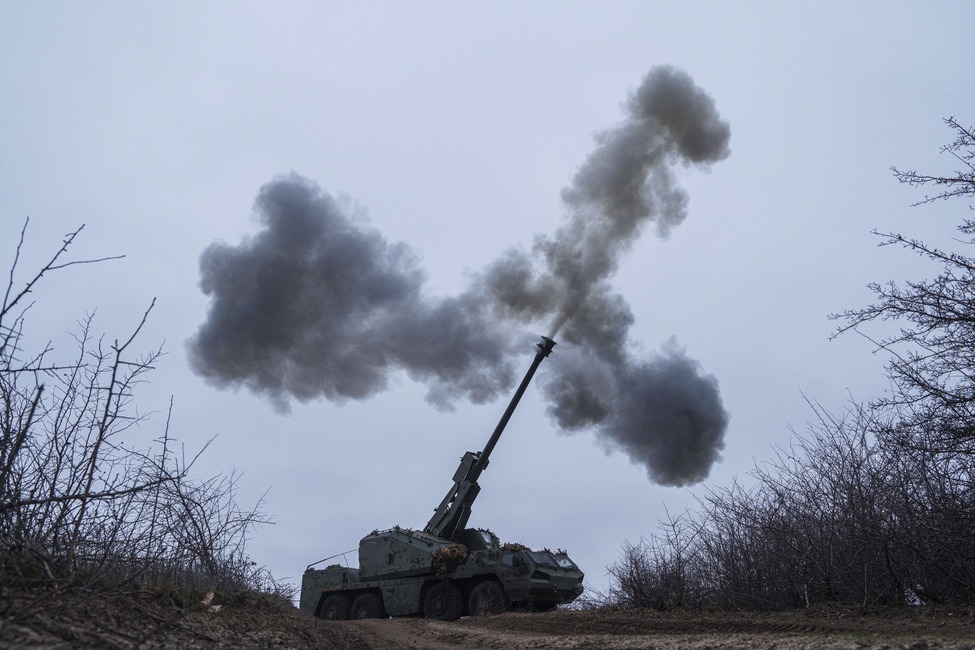
Even after three years of intense fighting, Ukraine continues to bleed Russia badly
Trump’s diplomatic approach reflects his characteristic personal leadership style, emphasising efficiency and direct negotiation. He prefers speaking directly with other world leaders, whether by phone or in face-to-face meetings, rather than relying on lower-level diplomatic processes
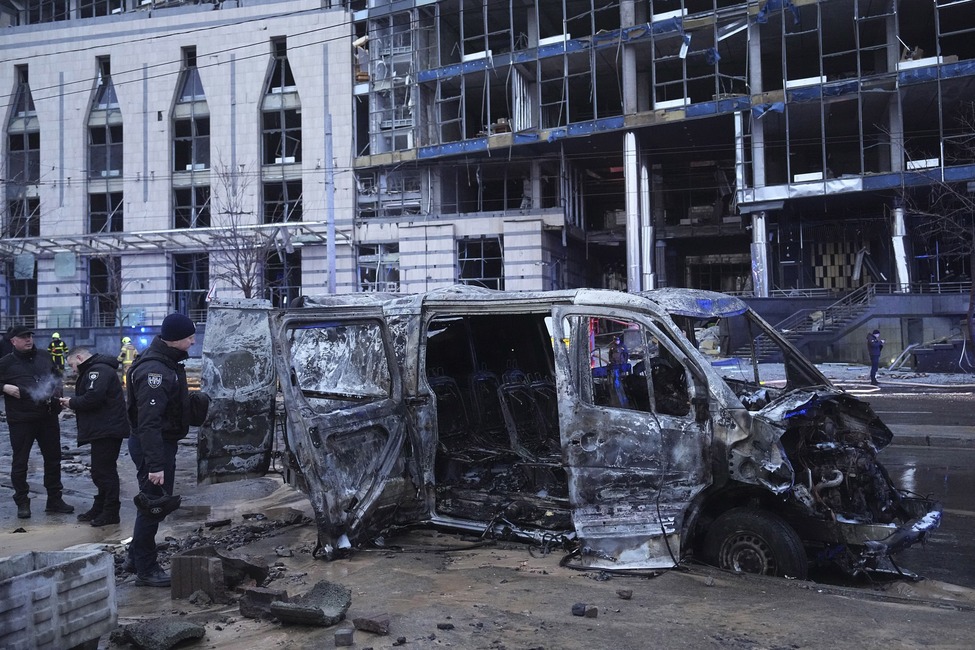
Despite the recent attempts by the US to negotiate a ceasefire, Russia continues to bomb civilian infrastructure in Ukraine
From Washington’s perspective, drawing Russia closer (or at least weakening Moscow’s ties with Beijing) serves US strategic interests. If a Russia-Ukraine peace deal can be reached quickly, US military aid currently directed toward Ukraine could be redirected to East Asia.
Additionally, Trump’s firm position during his meeting with Zelenskyy suggests a strategic shift. One possible explanation is that he is pressuring Ukraine into peace talks so that the US can redirect military resources to East Asia. Another possibility is that Trump is first seeking to improve relations with Russia in order to fracture the growing China-Russia alliance, ultimately pursuing a “Reverse Kissinger Triangle” strategy to counter China’s influence. From Washington’s perspective, drawing Russia closer (or at least weakening Moscow’s ties with Beijing) serves US strategic interests. If a Russia-Ukraine peace deal can be reached quickly, US military aid currently directed toward Ukraine could be redirected to East Asia. This suggests that Trump is highly motivated to facilitate a settlement that allows the US to conserve resources for confronting China.
The Riyadh talks marked a significant thaw in US-Russia relations, moving away from the Cold War-style hostility seen under Biden. In terms of governance philosophy, Trump and Putin share similarities— both are strong nationalists who aspire to restore their countries’ past greatness.
For India, this situation should be viewed in a positive way as growing Russian isolation by the West had led to the process of Russia becoming China’s junior partner. This increasing and obvious Russian dependence on China had direct implications for India in that the political, diplomatic and military support that India has been getting until now from Russia will either be diluted or end. Cumulatively, these events and statements foreshadow increasing Chinese belligerence towards India. Although US-Russia relations appear to be improving, scepticism remains among US Democrats, who continue to view Russia as a geopolitical adversary. Whether this diplomatic thaw is a long term shift or simply a short term Trump manoeuvre remains unclear.
Meanwhile, China and Russia have significantly strengthened their ties in recent years through multiple energy agreements and frequent joint military exercises. This raises doubts about whether Washington can successfully drive a wedge between Moscow and Beijing.

https://shorturl.fm/7MmyI
https://shorturl.fm/VKBv4
https://shorturl.fm/dQw9m
https://shorturl.fm/j3THL
https://shorturl.fm/naryr
https://shorturl.fm/rZDWp
https://shorturl.fm/mLE40
https://shorturl.fm/jxS0x